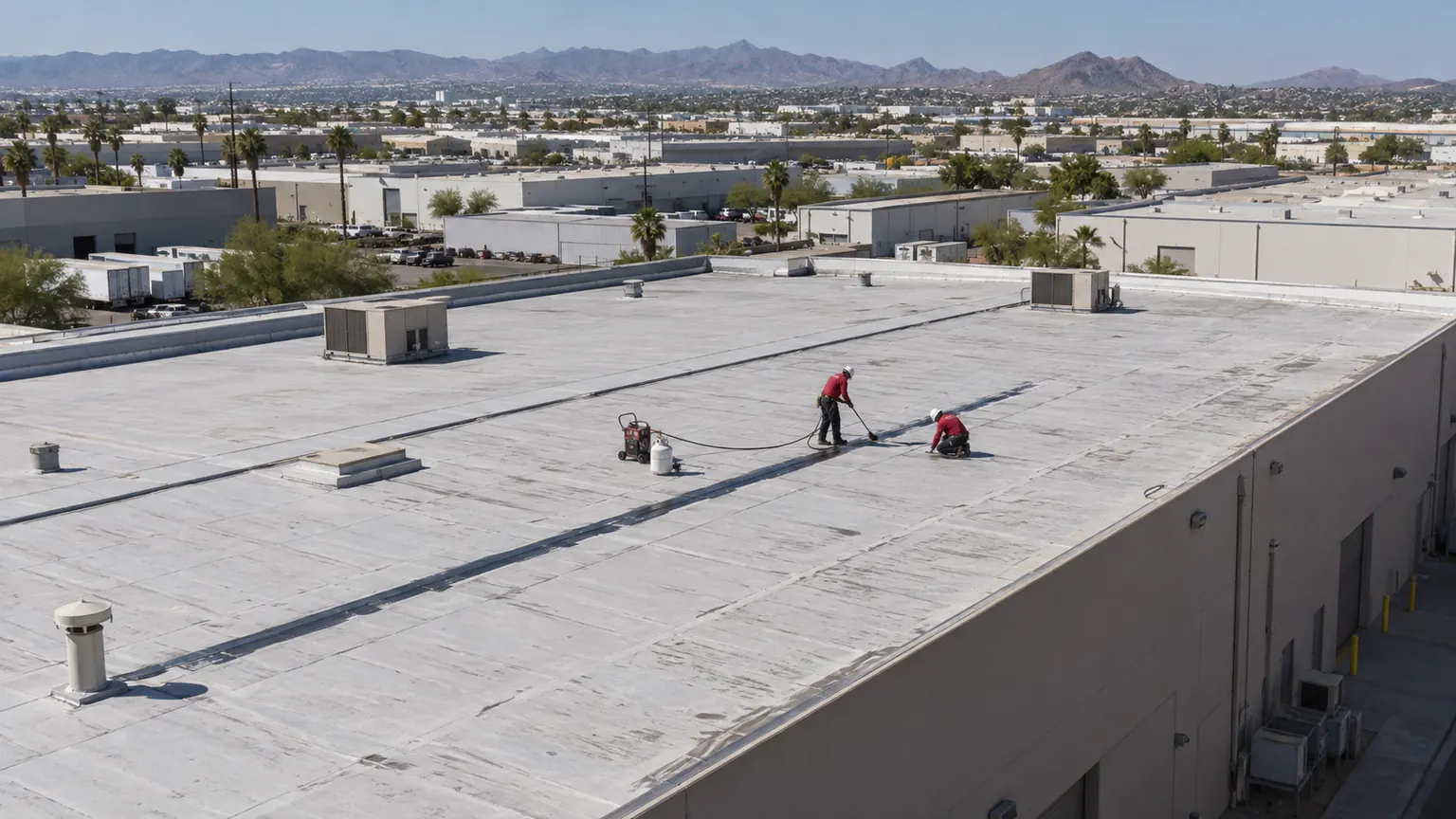
Flat Roof Repair
Modified bitumen and built-up repairs follow the flat roof method, with plies matched to the existing roof.
See flat roof repair in Youngtown
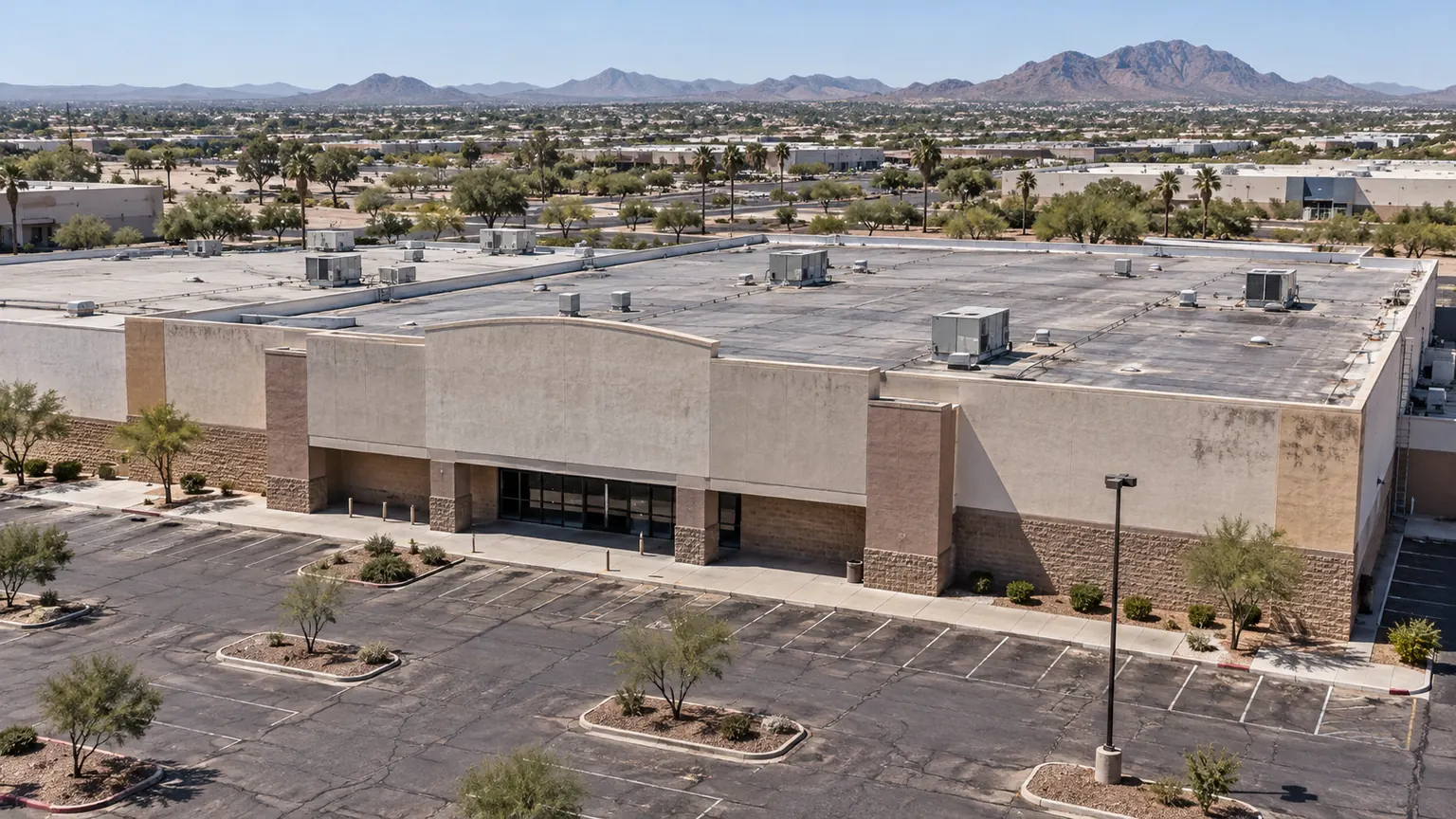
Commercial roof repair in Youngtown often means older modified bitumen and built-up roofs: blisters cut out and new plies cold-applied beside occupied buildings.
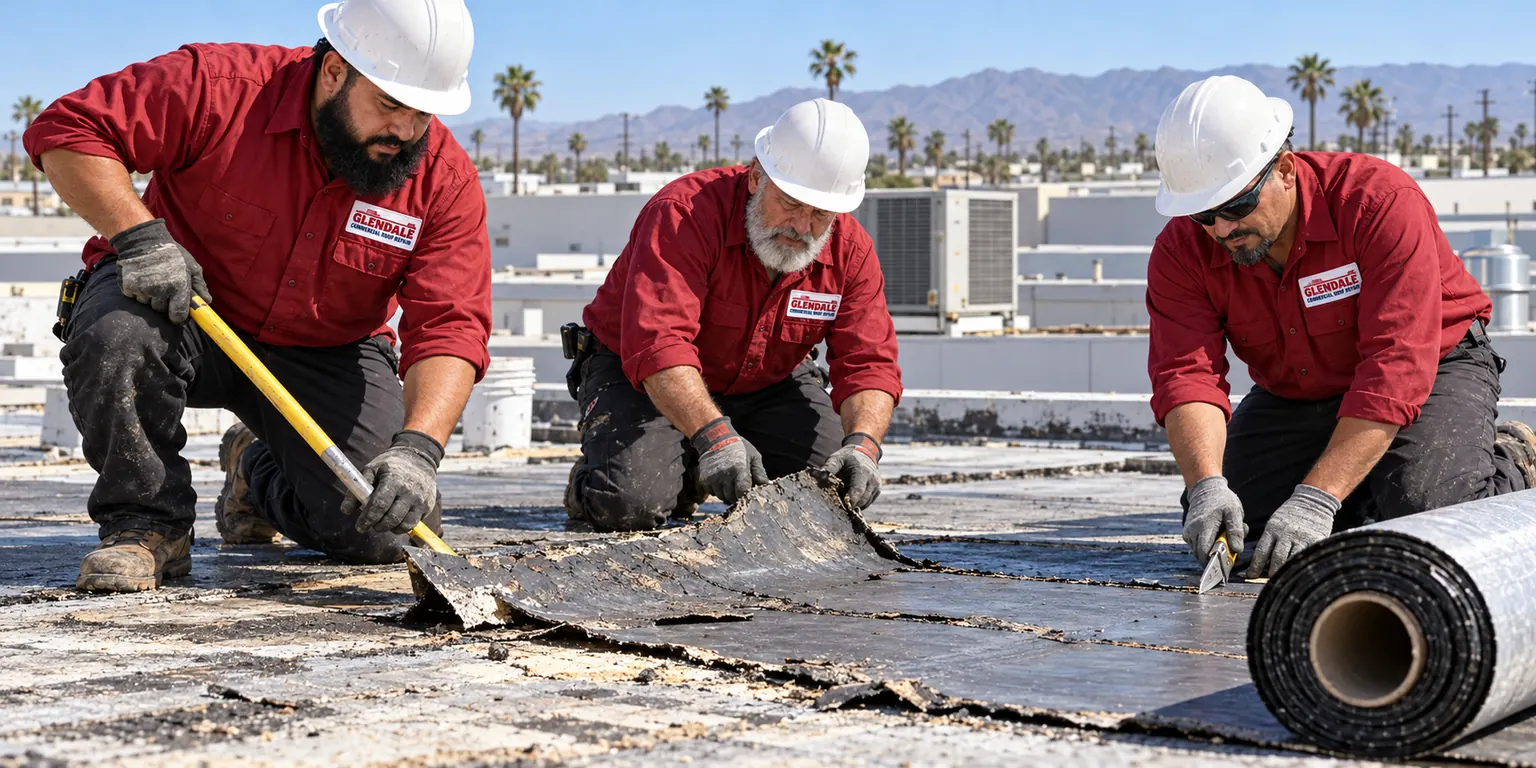
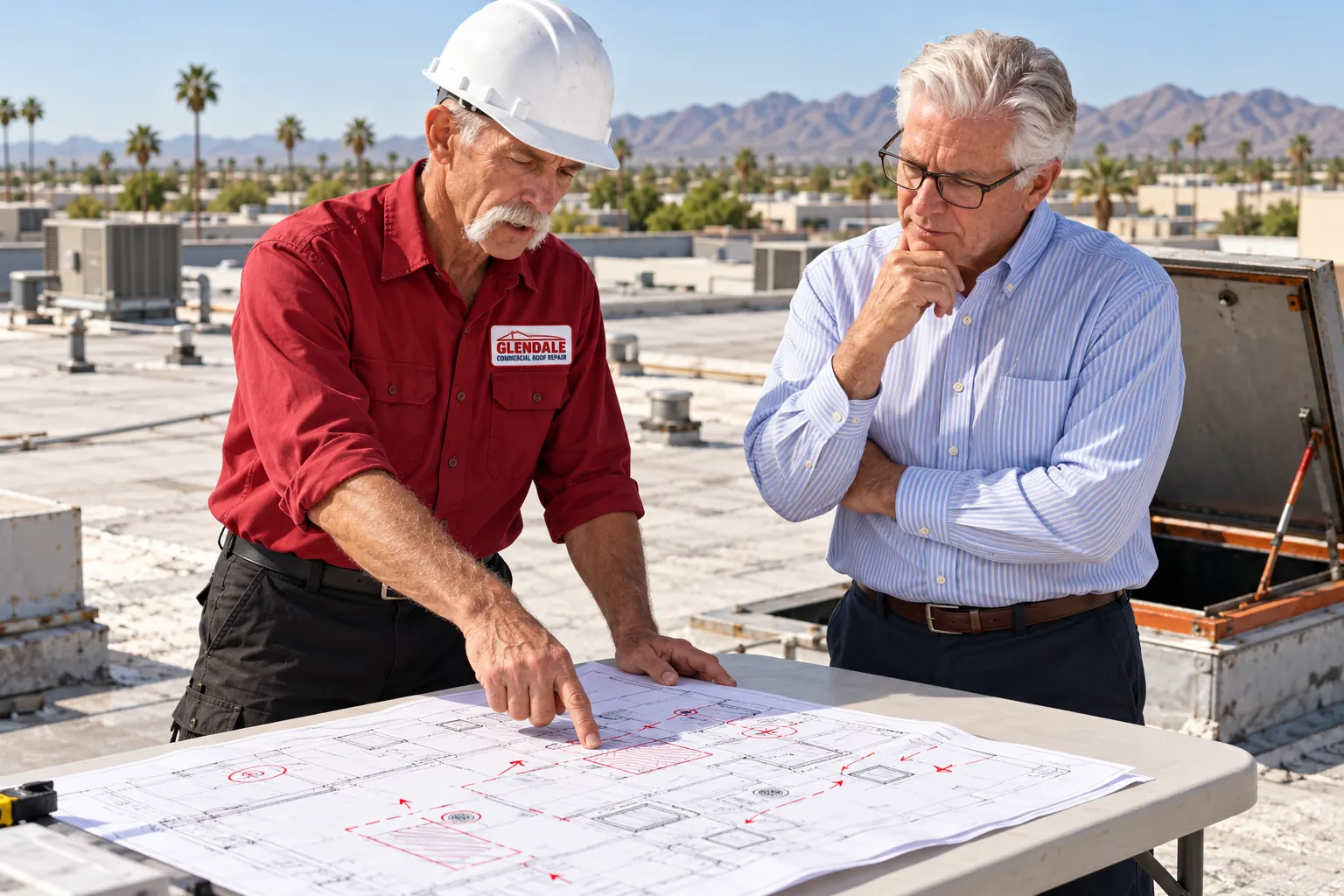
Older modified bitumen and built-up roofs blister, crack, and lose their surfacing in the sun. The standard fix is to cut out the blister and add new plies, either torched or set in cold adhesive.
Next to occupied buildings, cold-applied plies keep an open flame off the roof. Youngtown is the smallest town in our coverage, and plan review runs through its Community Development office.
Built-up and modified bitumen roofs show their age in five places.
Trapped moisture lifts the plies into domes that crack in the sun and let water straight into the insulation below.
Granules and gravel wear off over the years, exposing the asphalt to UV, which dries it out and cracks the surface.
A web of surface cracks marks a roof near the end of its life, worth noting for the repair-or-replace call.
Modified bitumen flashing at walls and edges loses adhesion and pulls away at the top.
Old drains on built-up roofs often have cracked lead flashing or loose clamping rings that let water under the plies.
Older roofs have the least margin left, so a small opening matters more than it would on a newer sheet.
Cutting out blisters before they crack open keeps water out of insulation that has already aged. Dry board under the plies keeps the roof working longer.
Cold-applied plies keep torches off the roof next to occupied rooms and entrances. Entrances and windows stay clear of flame and fumes.
Patching a few blisters now lets you plan a replacement on your own timeline. Moisture readings show how much time the roof has left.
Resurfacing bare spots around each repair slows sun damage there. Bare spots are where cracking starts next.
Older roofs in Youngtown usually need one of these three services.
Modified bitumen and built-up repairs follow the flat roof method, with plies matched to the existing roof.
See flat roof repair in Youngtown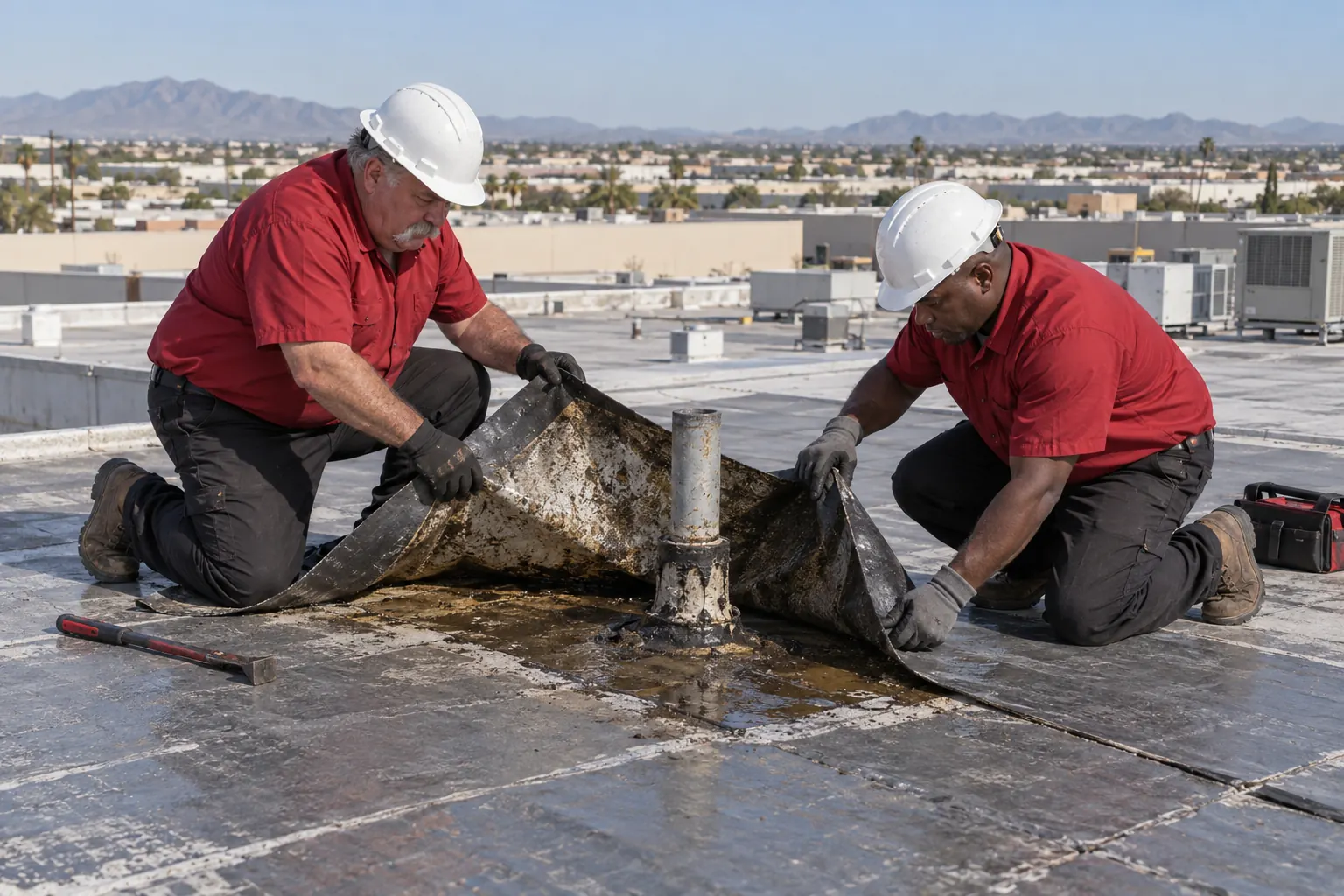
Stains below an older roof get traced to the ply, flashing, or drain letting water in.
See commercial roof leak repair in Youngtown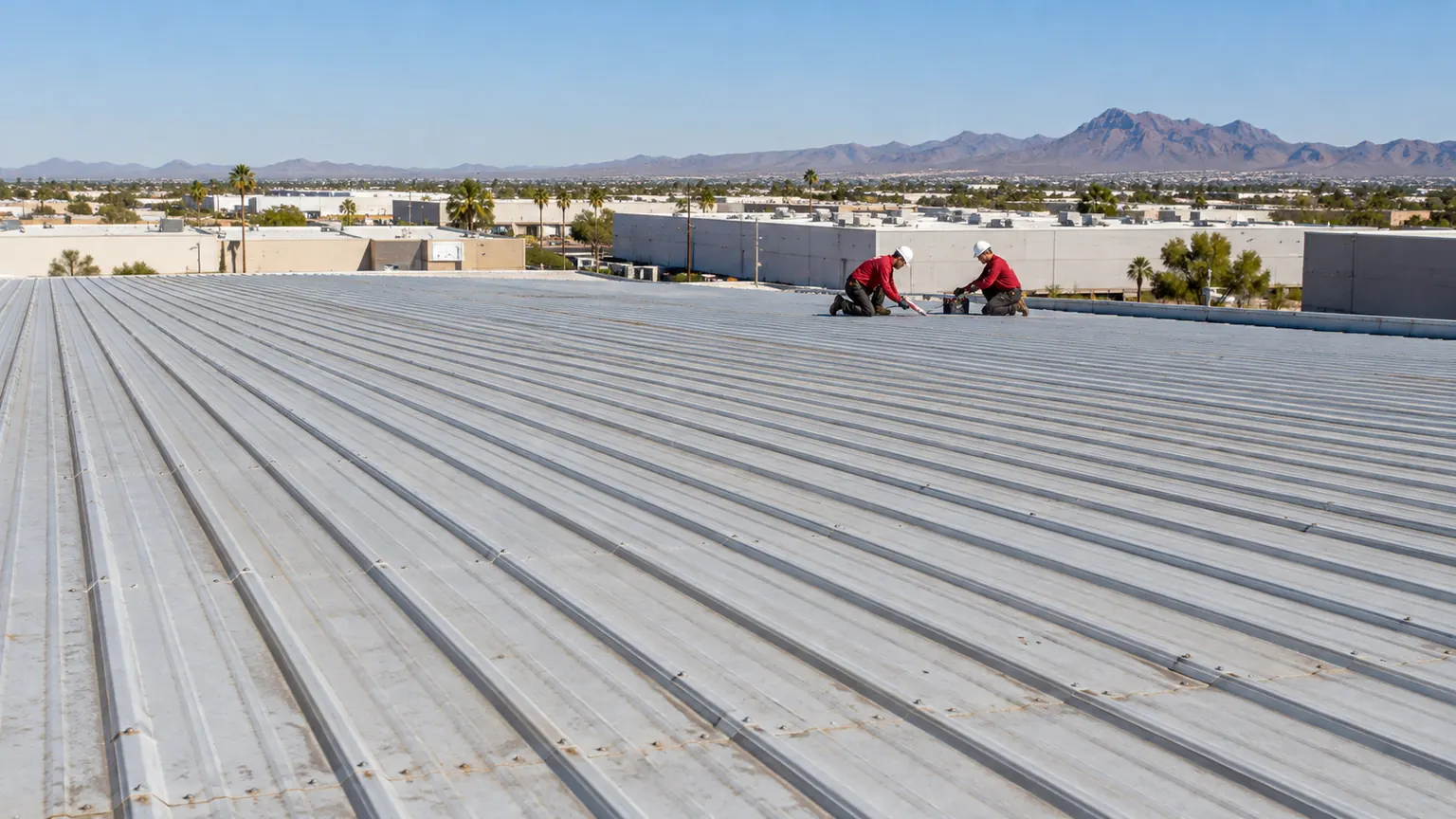
Small service shops with metal roofs get fastener, lap, and rust repairs at the same visit.
See commercial metal roof repair in YoungtownCracked blisters let water straight into the insulation. Tell us roughly how many you've seen and where.
Older roofs get the same five steps, with extra care at the readings.
The walk covers blisters, surfacing, flashing, and drains, with moisture readings around every blister and stain. Each blister gets pressed to see if it holds water.
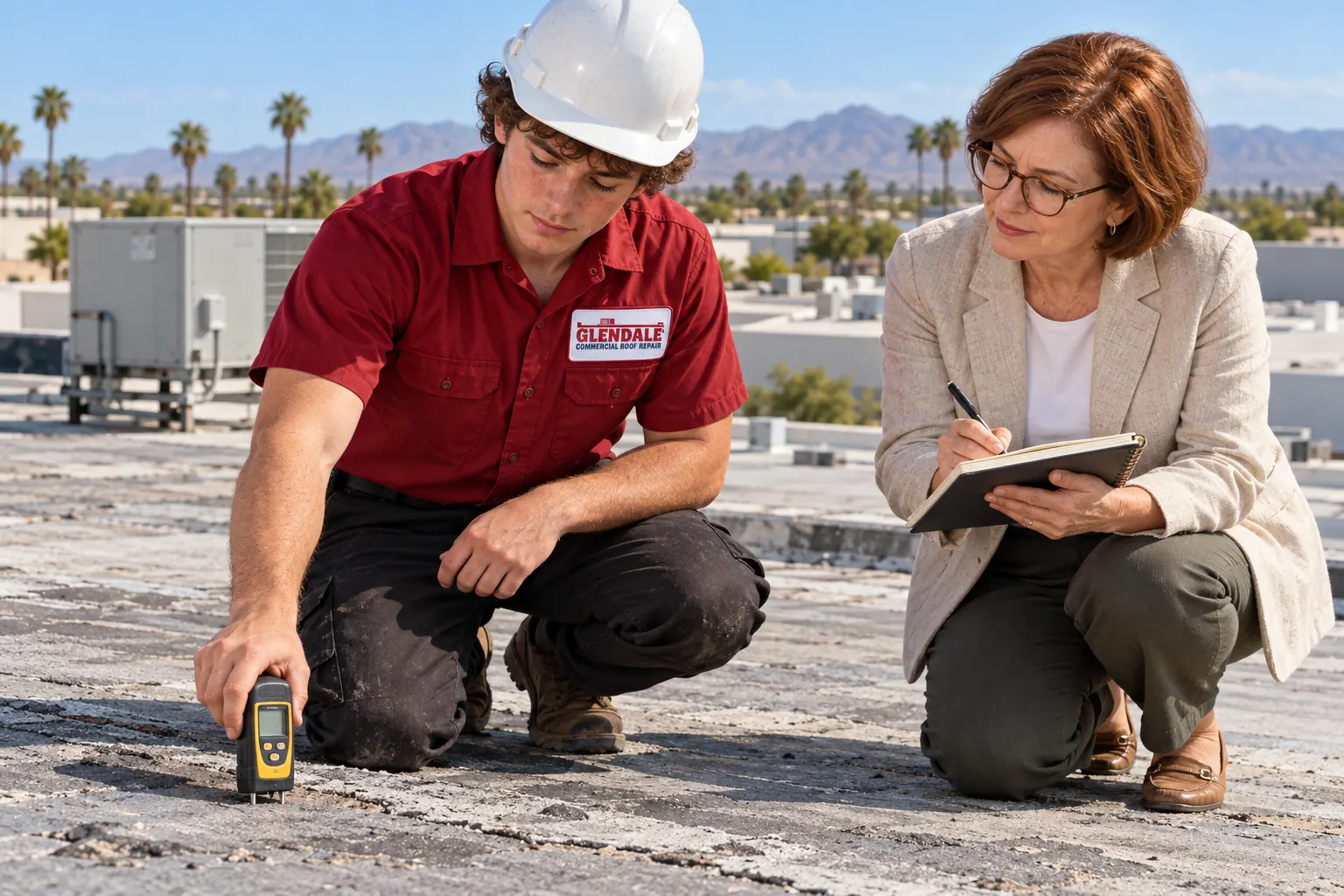
Water can enter at one cracked blister and travel between plies, so readings outward from each stain show where it spread. Blisters near the wall flashing get checked closely, since water collects there.
Cracked blisters and open laps get cold-applied mastic as a temporary seal when rain is close. Mastic patches stay small so they come off cleanly for the permanent plies.
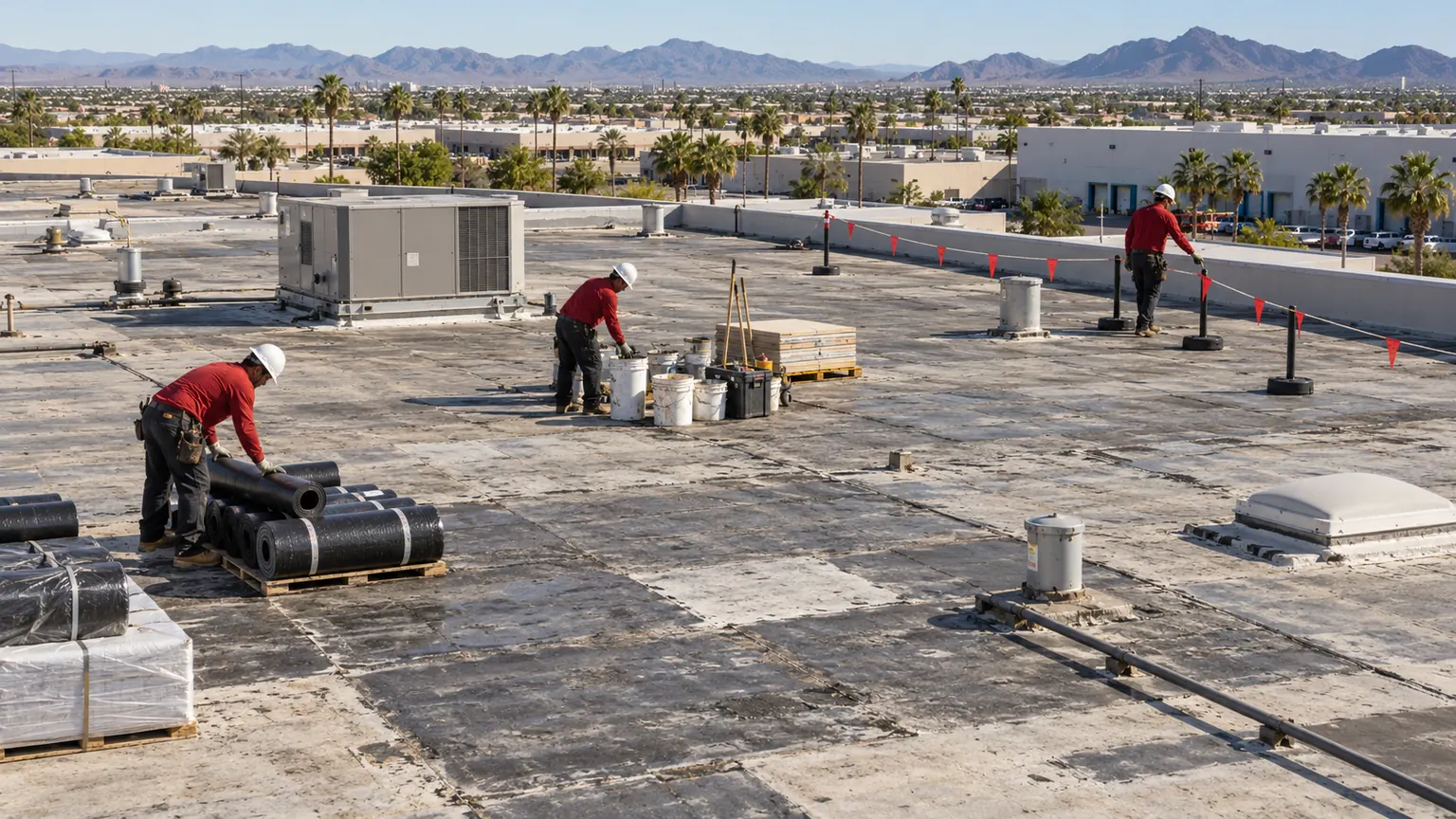
Blisters get cut out to dry material, wet board gets replaced, and new plies get set in cold adhesive or torched where it's safe. Surfacing goes back over each patch to shade the new plies from the sun.
After the next storm, the new plies get checked at their edges, and the ceiling below gets checked for drips. Blisters found on the recheck get marked for the next spring visit.
We repair commercial roofs in these neighboring towns too.
Drain and scupper repairs on recreation-center roofs, right next door to the east.
Skylight, smoke vent, and hatch repairs across the Agua Fria River.
Spray foam repairs for bird peck holes and sun-browned foam.
Commercial roof repair in our home city, southeast along Grand Avenue.
What Youngtown owners ask about older built-up roofs.
Yes. A temporary patch slows water until a lasting repair is possible: clearing a backed-up drain, sealing a cracked blister or split flashing with compatible mastic, or covering a torn area so rain runs off. The stopgap gets replaced once the roof is dry and the cause is known.
Torch-applied plies are melted into place with an open flame, and cold-applied plies are set in adhesive. Cold work keeps flame off the roof near occupied buildings and dry, aged materials.
Plan review runs through the Town of Youngtown Community Development office. Small patches are handled differently from removing a roof section.
A few blisters over dry insulation are an ordinary repair. Blisters across most of the roof, or sitting over wet board, point toward replacement.
It's a web of cracks in the surface that shows the asphalt has dried out from sun exposure. Spot repairs help, though widespread alligatoring is a sign to start planning a replacement.
Moisture readings around the blister show it before anything gets cut. Wet board under a blister is cut out and replaced along with the plies above it.
Repeated patches work while the roof around them still holds together. Once leaks open in several places each season, each new patch buys less time, and planning a replacement makes more sense.
Gravel gets cleared from the repair area, the plies get fixed, and surfacing goes back over the patch.
Call or request a free estimate, and we'll check the blisters, flashing, and drains on your older roof.
Leave a name and number and we'll call you back about the leak or damage.
Or call now: (623) 310-0166