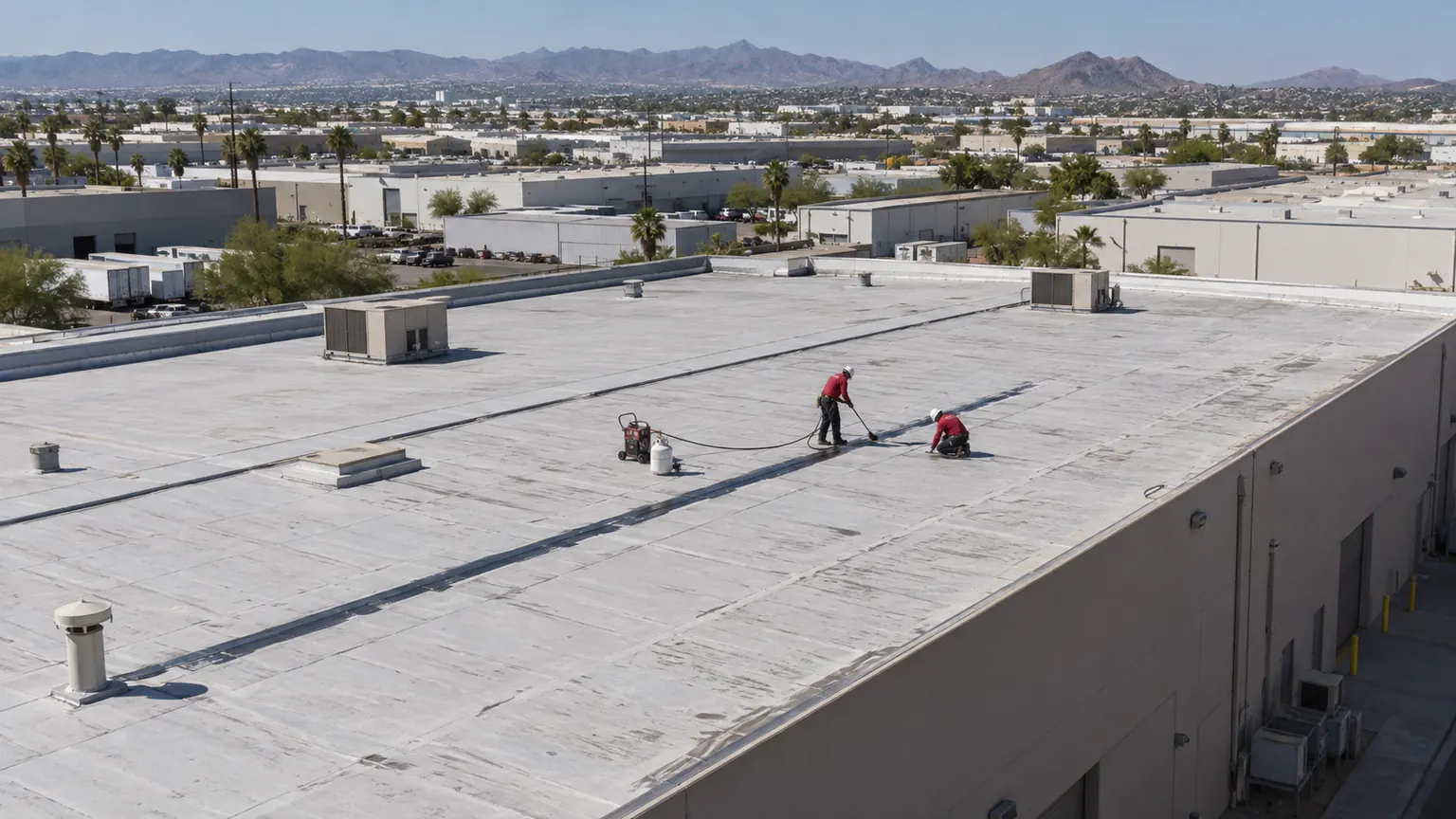
Flat Roof Repair
Foam, TPO, and modified bitumen roofs on Peoria retail and office buildings get patches made from the same material as the roof.
See flat roof repair in Peoria
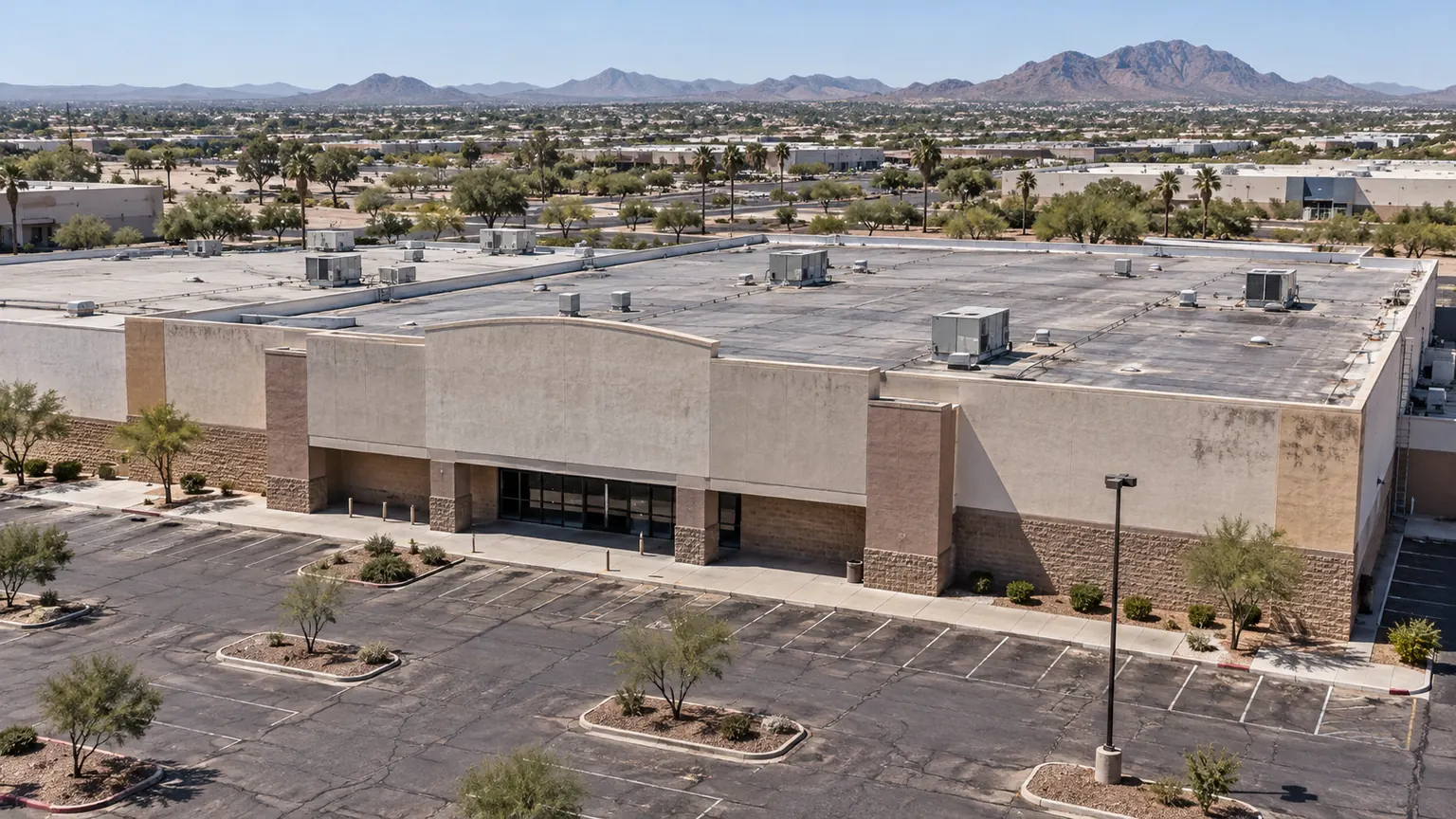
We repair commercial roofs across Peoria, including spray foam roofs with bird peck holes and sun-browned spots that need cutting out, refilling, and recoating.


Birds peck holes in foam roofs, and once the coating is gone, sun breaks down the foam surface until it turns brown and crumbly. Small damage is a quick fix when it gets caught early.
We cut out the damaged foam, fill the cavity with new foam or sealant, and recoat the patch to match. Permits, when the scope needs one, run through Peoria's online Development Services Portal.
Foam and membrane roofs fail in different ways, so each zone gets a look for both.
Brown, chalky foam shows where the coating wore through. Pressing it with a thumb tells whether the damage stays at the surface or runs deeper into the foam.
Birds open small holes that let water into the foam. Each hole gets cut clean, filled, and sealed so the foam stays dry.
Foam tapers toward drains and roof edges, where dust and ponding wear the coating first and bare foam starts to show around the drain bowl.
Curbs and pipes sprayed with foam crack at the base as equipment vibrates, and water follows the crack down the side of the curb.
Moisture readings find soaked foam that needs a bigger section removed before the roof is recoated.
Foam repairs stay small only while the damage is shallow.
A peck hole filled this month is a small patch; left through summer, the sun eats a wider crater around it.
Sealed holes keep rain out of the foam, which saves removing a soaked section later.
Recoating each patch restores the layer that protects foam from UV.
A visit before June 15 gets holes closed before monsoon storms reach them.
These three services cover most Peoria calls.
Foam, TPO, and modified bitumen roofs on Peoria retail and office buildings get patches made from the same material as the roof.
See flat roof repair in Peoria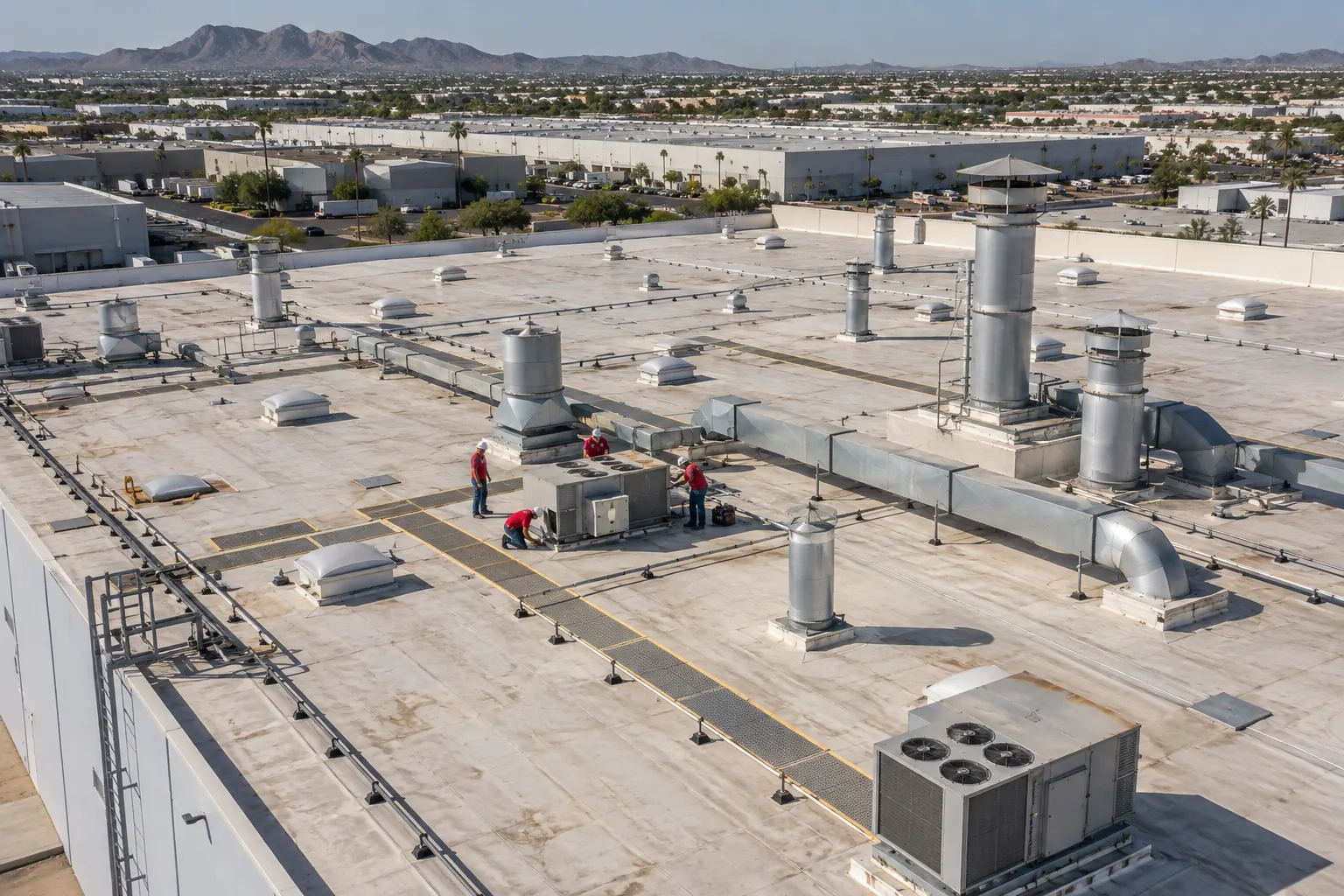
Light-industrial and distribution roofs with exhaust fans get repair zones set around equipment and shifts.
See industrial roof repair in Peoria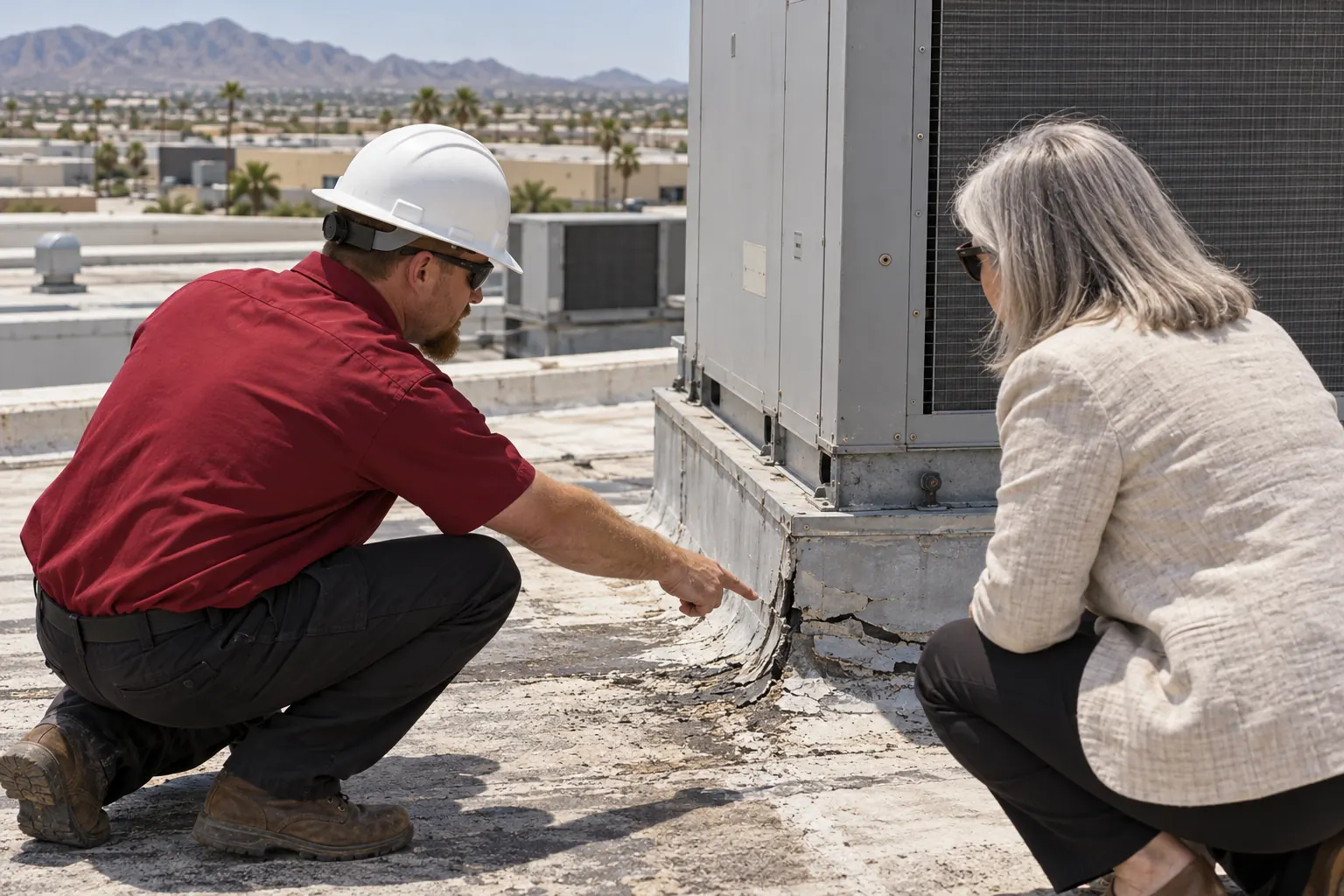
When a stain inside doesn't line up with a visible hole, tracing finds the opening first.
See commercial roof leak repair in PeoriaPeck holes get bigger every season the coating stays open. Tell us how many spots you've seen and where.
Foam and membrane repairs follow the same five steps.
The walk checks foam for peck holes, browned spots, and soft areas, and membrane sections for open seams, with readings near any stain. Coating thickness around each hole gets noted for the recoat.
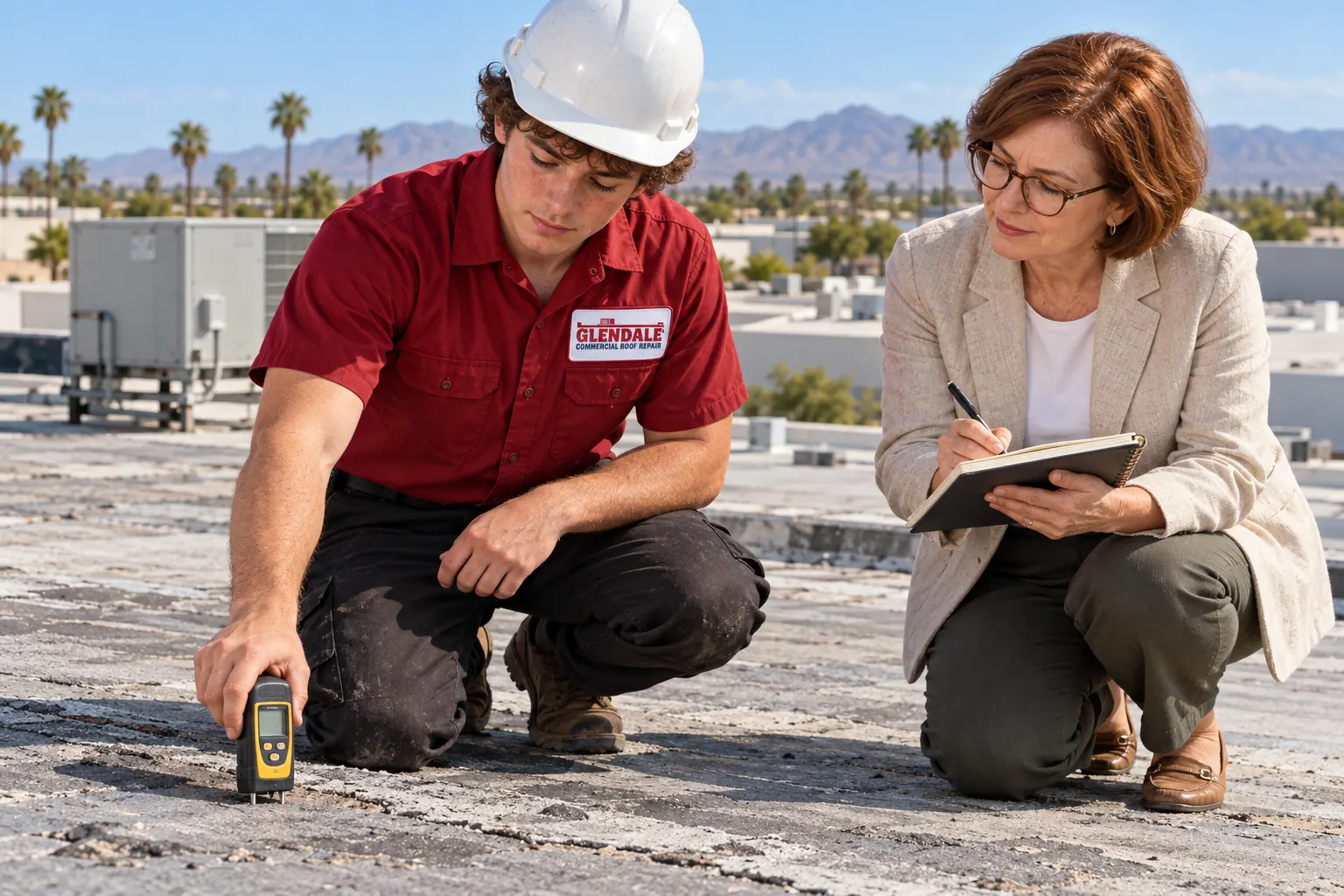
Water entering foam spreads through damaged cells, so readings around each hole show how much foam needs to come out. Soft foam around a hole marks how far the water got.
Open holes get a temporary sealant when rain is close, keeping water out of the foam until the repair. Holes near drains get sealed first, since water reaches them soonest.
Damaged foam is ground out to firm material, the cavity is refilled, and the patch gets a coating that matches the roof around it. Patches near drains and edges get extra coating where wear is heaviest.
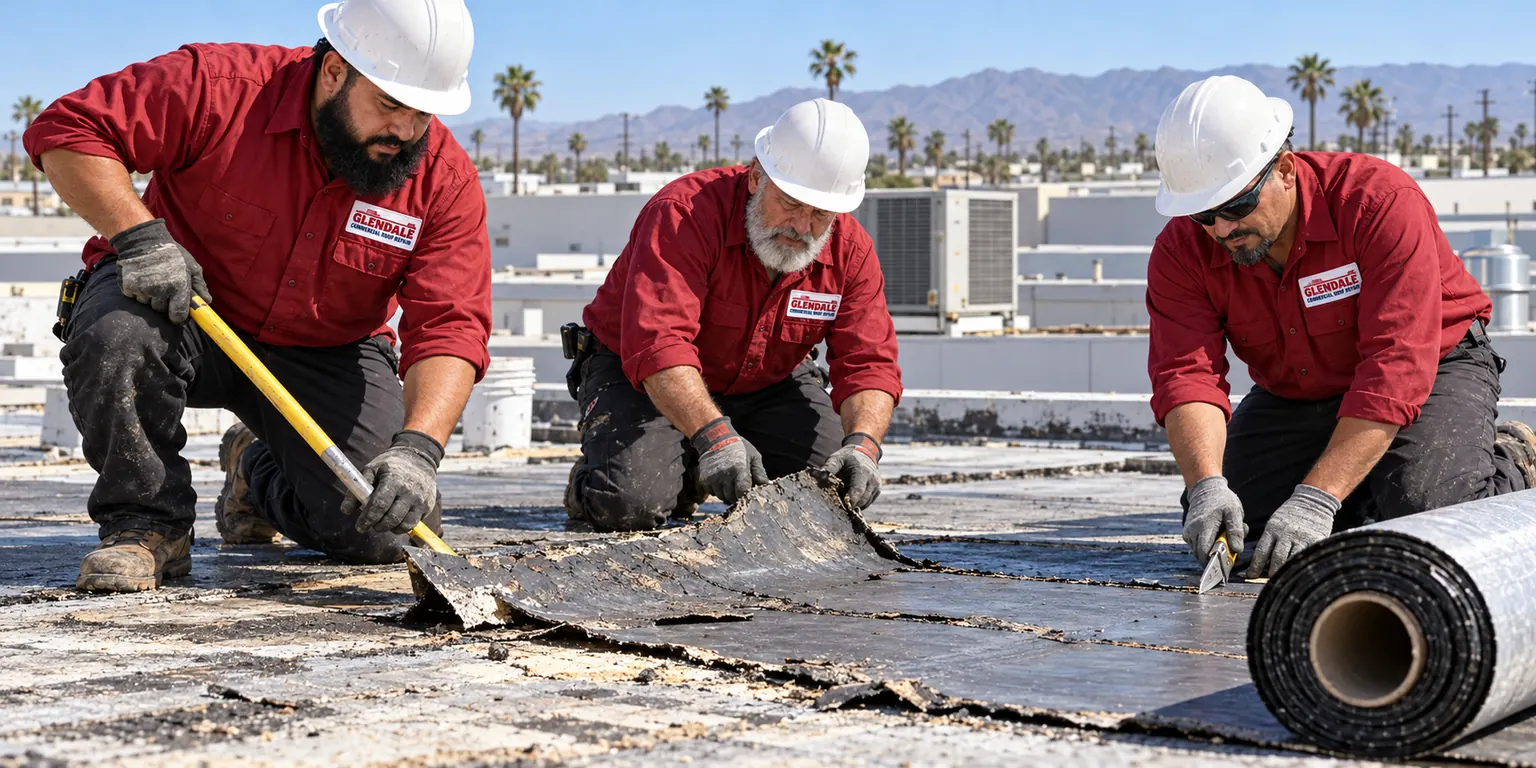
The patched areas get checked after the next storm for cracks at the edge of the new foam or coating. New peck holes found on the recheck get filled while the roofers are up there.
We repair commercial roofs in these neighboring towns too.
Drain and scupper repairs on recreation-center and shopping-center roofs, northwest along Grand Avenue.
Cold-applied plies on older modified bitumen and built-up roofs beside occupied buildings.
Repairs that grow into section replacements once wet insulation turns up under the patch.
Commercial roof repair across our home city, from Loop 101 warehouses to downtown storefronts.
What Peoria owners ask about foam and flat roof repairs.
By cutting out the damaged foam, filling the cavity with new foam or sealant, and recoating the patch to match the surrounding roof. Small damage is quick when caught early; large areas of exposed or water-soaked foam need a bigger section removed first.
Sun breaks down foam once its coating wears through. The brown, crumbly surface is the foam itself weathering, and it keeps losing thickness until it's recoated.
It turns on the scope. Small patches are handled differently from removing a roof section, and Peoria permits run through its online Development Services Portal when one is needed.
Yes. Additions and canopies often carry a different system, and each section gets patched in its own material.
Twice a year works for most foam roofs: a spring check before monsoon season and a fall check after it, filling peck holes and thin spots each time.
Foam repairs need a dry surface and go best in milder hours, so summer jobs on Peoria roofs start early in the morning. The coating over each patch cures faster in the heat, which helps the repair close up at the same visit.
Wet foam has to come out. Moisture readings around each hole show how far water spread, and the soaked foam is cut back to dry material before new foam goes in and the area is recoated.
Only when worn coating covers most of the roof. Patches get recoated one at a time, and a full recoat comes up only if the inspection finds bare foam across large areas.
Call or request a free estimate, and we'll check the foam and membrane on your Peoria building.
Leave a name and number and we'll call you back about the leak or damage.
Or call now: (623) 310-0166