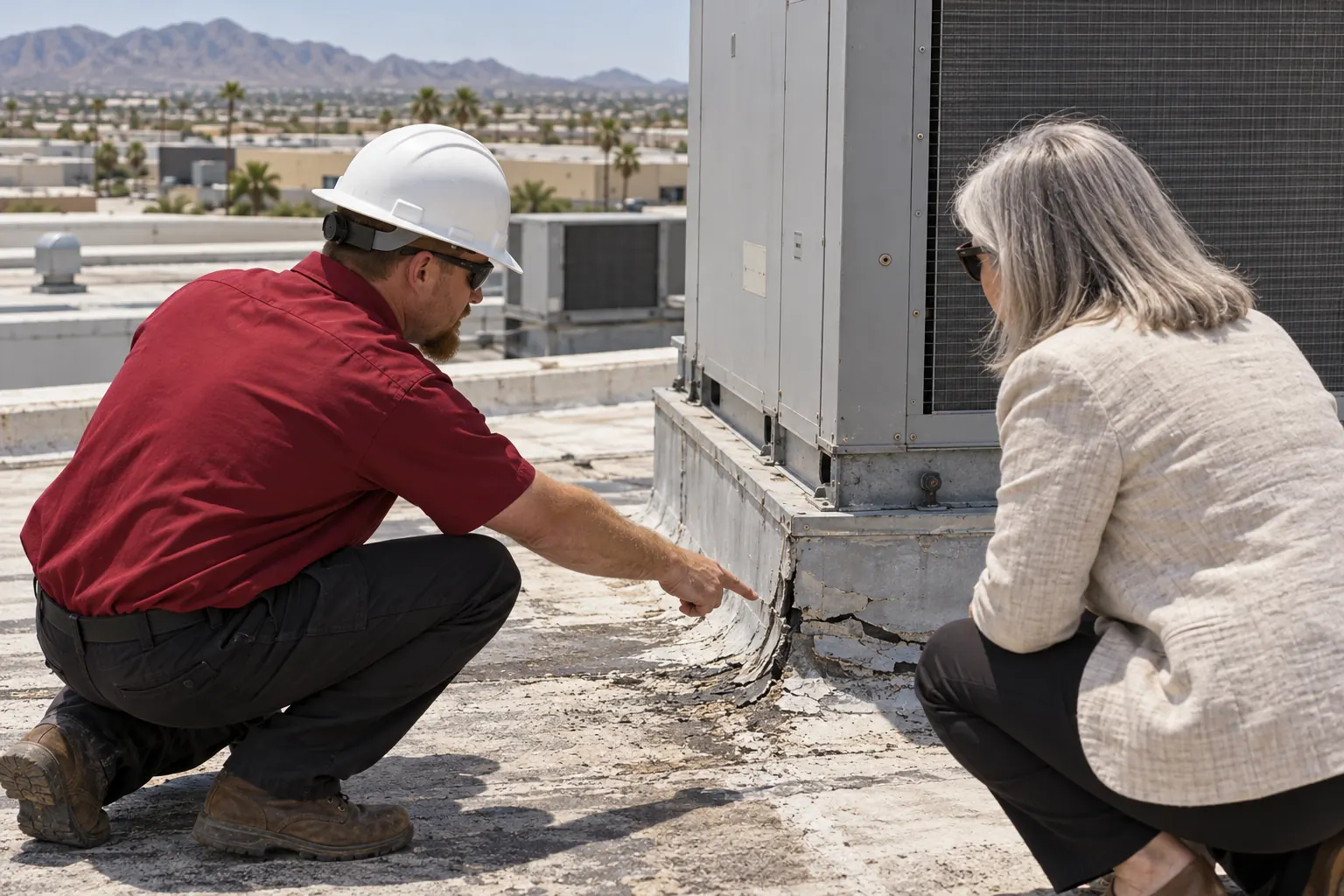
Commercial Roof Leak Repair
When a stain keeps showing up away from the obvious seam, leak tracing finds the opening before any patch goes on.
Commercial roof leak repair in Glendale
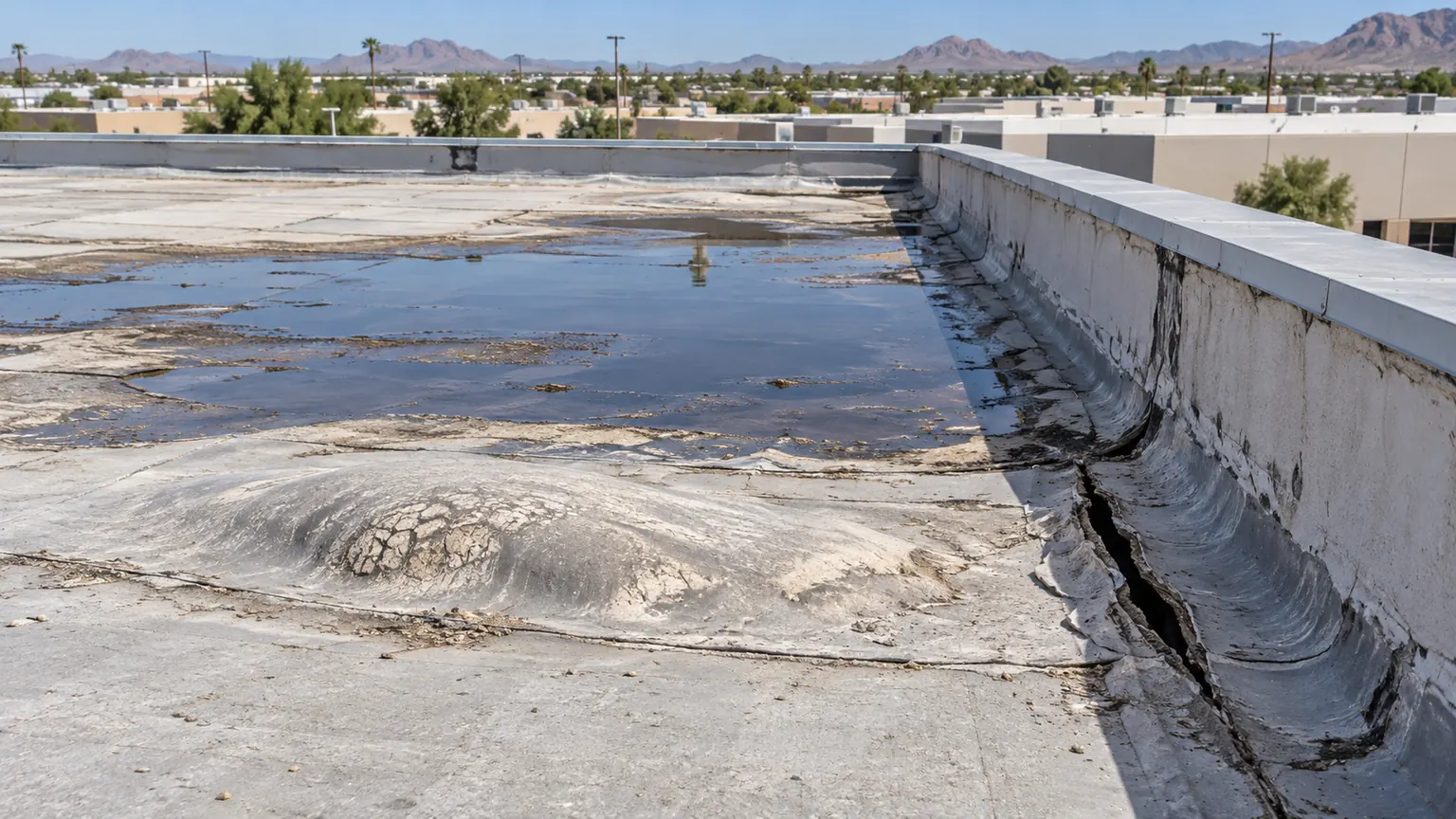
We patch TPO, EPDM, modified bitumen, built-up, and spray foam roofs in Glendale with the same material already on the roof, so repairs hold through summer heat.
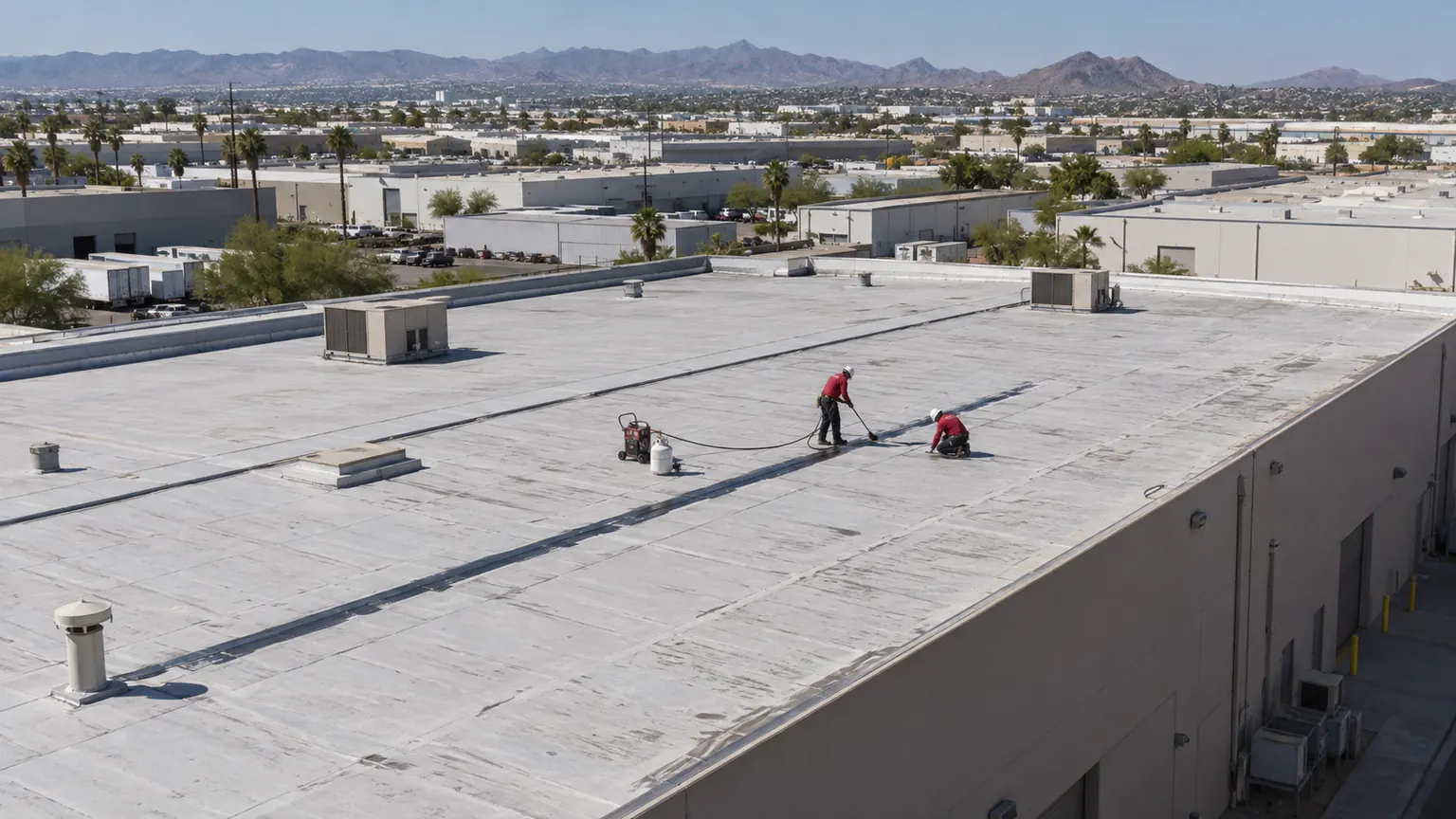
TPO, EPDM, mod bit, built-up, foam
Seams and curb flashing
Meter readings at every leak
Regularly past 100°F
A repair holds when the problem is local and the sheet around it still has life. Here are both sides.
Heat cycling works on every joint in the membrane. These five zones get checked on every flat roof visit.
Wall flashing pulls loose where the membrane turns up the parapet, and coping joints open above it. Water then runs behind the flashing and down inside the wall.
TPO welds and EPDM tape lose grip as the sheet shrinks in summer. A seam probe finds the loose runs, and each gets welded, taped, or covered with a strip.
A strainer packed with monsoon dust holds water against nearby laps. The drain is cleared, then the clamping ring or scupper sleeve is resealed into the membrane.
HVAC curbs, pipe boots, and pitch pans dry out and split at the base. New flashing goes around each opening, welded or adhered to the sheet below.
Moisture readings show how far water spread under a leak. Small wet areas are cut out and replaced with dry board before the patch goes on top.
Glendale has plenty of TPO, EPDM, modified bitumen, built-up, and spray foam roofs, and each takes its own patch method.
| Method | What It Fixes | When It's Enough |
|---|---|---|
| Heat-Welded TPO Patch | Open seams and punctures on TPO | When the sheet around it is still flexible |
| Primed Seam Tape Or Cover Strip | Lifting laps on EPDM | When the lap is clean and dry under the tape |
| Cut-Out And New Plies | Blisters and cracked plies on mod bit or built-up | When only a few spots are affected |
| Grind, Refill, And Recoat | Bird holes and browned foam | When the foam below is dry and firm |
| Curb And Pipe Re-Flash | Split base flashing at openings | When the curb itself is solid |
Flat roofs hold water longer than sloped ones, so a small opening keeps working on the building until it's closed.
Closing an open seam before monsoon season keeps the board under it dry and the cut-out small.
Water that sits on a steel deck starts rust from the top down, and a closed seam stops it at the source.
A spring visit lets the work happen on a dry day you pick, ahead of the first storm.
Matched materials move with the sheet through 100°F afternoons, so a patch on a healthy membrane can last as long as the roof around it.
Open seams beside HVAC curbs leak into the ceiling below the unit. Tell us which unit and when the drip started.
Each visit runs in the same order, starting with readings and ending with a recheck after rain.
The roof walk covers every seam run, curb, drain, and parapet, with moisture readings around each stain location to map wet insulation.

Flat roofs move water sideways under the sheet. Starting above the stain, the search works upslope through seams and curbs until the entry point shows.
With rain in the forecast, open seams get temporary tape and torn areas get covered so water runs off until the permanent patch.
Wet board is cut out and replaced, then the opening gets a matching patch: welded TPO, primed EPDM tape, new plies, or refilled and recoated foam.
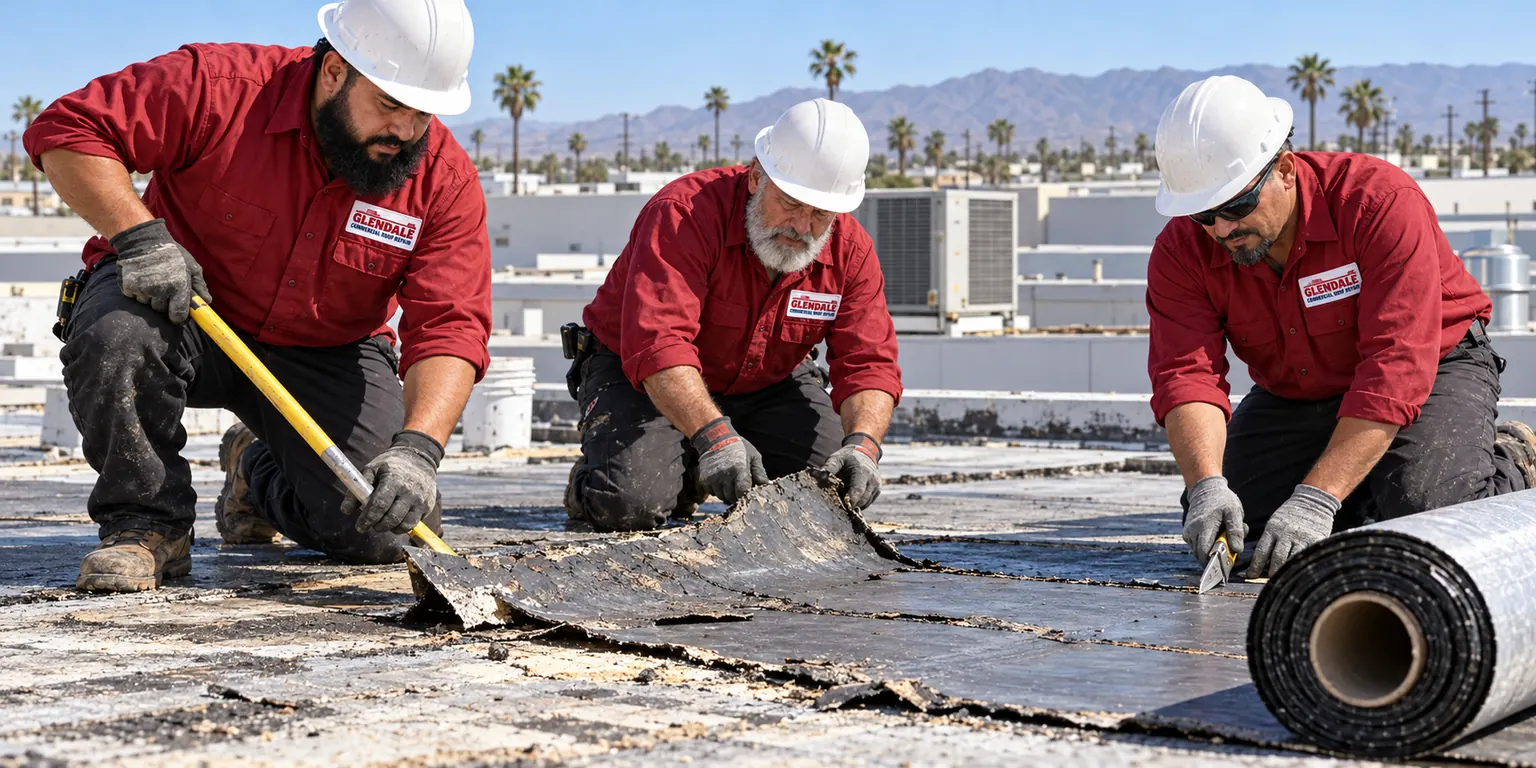
The patched areas and the ceiling below get checked after the next storm, and any ponding ring sitting on new work gets marked for attention.
Flat roof problems often overlap with these two services.
When a stain keeps showing up away from the obvious seam, leak tracing finds the opening before any patch goes on.
Commercial roof leak repair in Glendale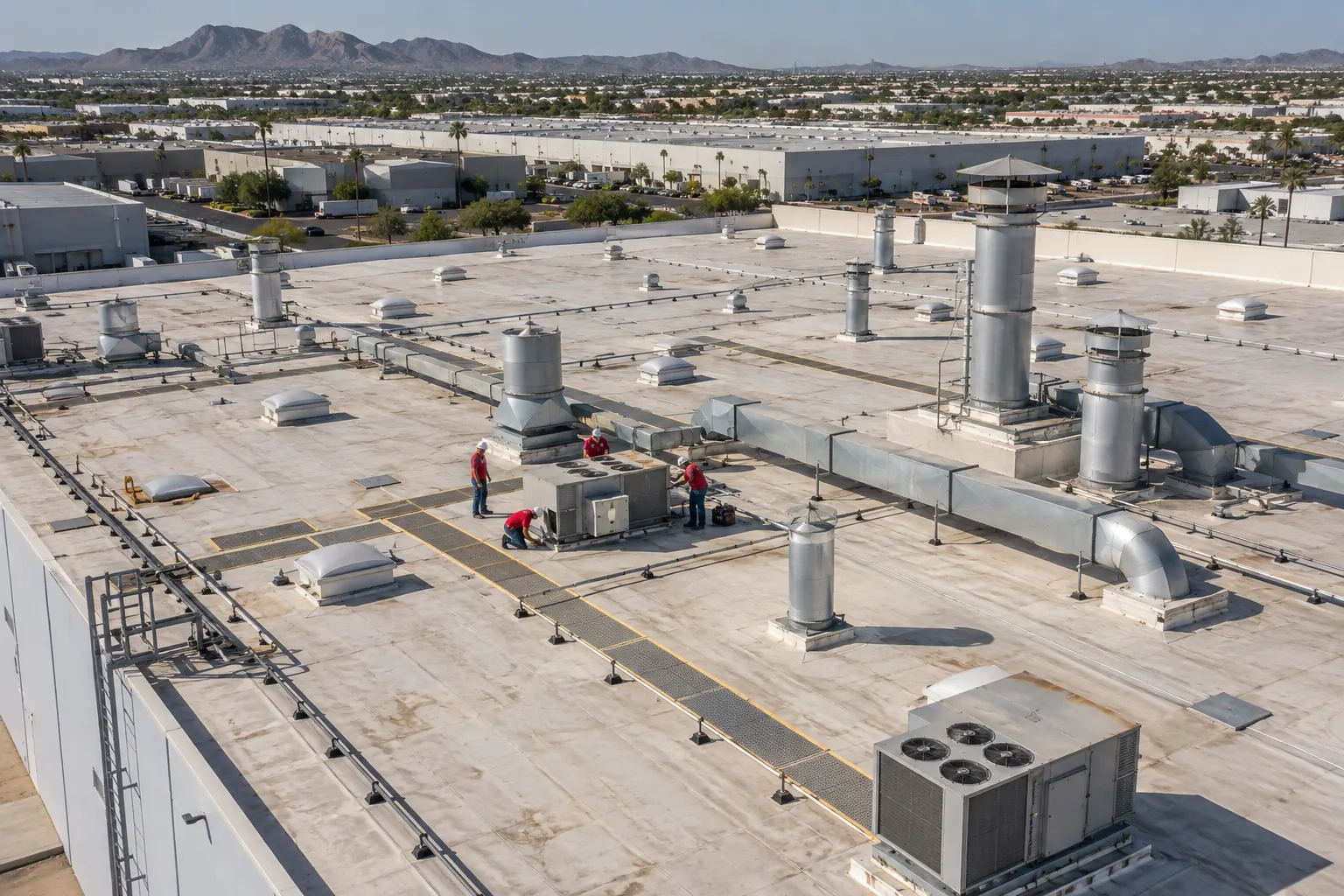
Flat roofs over plants carry exhaust fans and process vents, which need shutdowns and residue cleanup before patching.
Industrial roof repair in GlendaleWhat Glendale owners ask about patching flat roofs.
Finding every failed spot, then fixing each with material that matches the roof. TPO gets heat-welded patches, EPDM gets primed tape or cover strips, modified bitumen and built-up get new plies over cut-out blisters, and foam gets ground out, refilled, and recoated.
Blisters with dry insulation under them can be cut out and re-plied. A blister that holds water or sits over wet board gets the wet material removed first, then new plies.
Ponding usually comes from a packed drain, a sagging deck section, or a low spot between drains. Clearing the drain is the first fix, and rings that stay after the rest of the roof dries point to a low spot.
A matched patch on a membrane with life left holds through storms like the roof around it. Patches on brittle, shrinking membrane last only until the next weak seam nearby opens.
The patch itself gets recoated to match the surrounding foam. Once coating wears off, the sun breaks down the foam surface, so worn coating around the patch is worth noting at the same visit.
Yes. Additions often carry a different membrane from the original building, and each section gets patched in its own material, with a separate detail where two systems meet.
Tell us the roof system and where it leaks, and we'll set up a free roof walk in Glendale.
Leave a name and number and we'll call you back about the leak or damage.
Or call now: (623) 310-0166