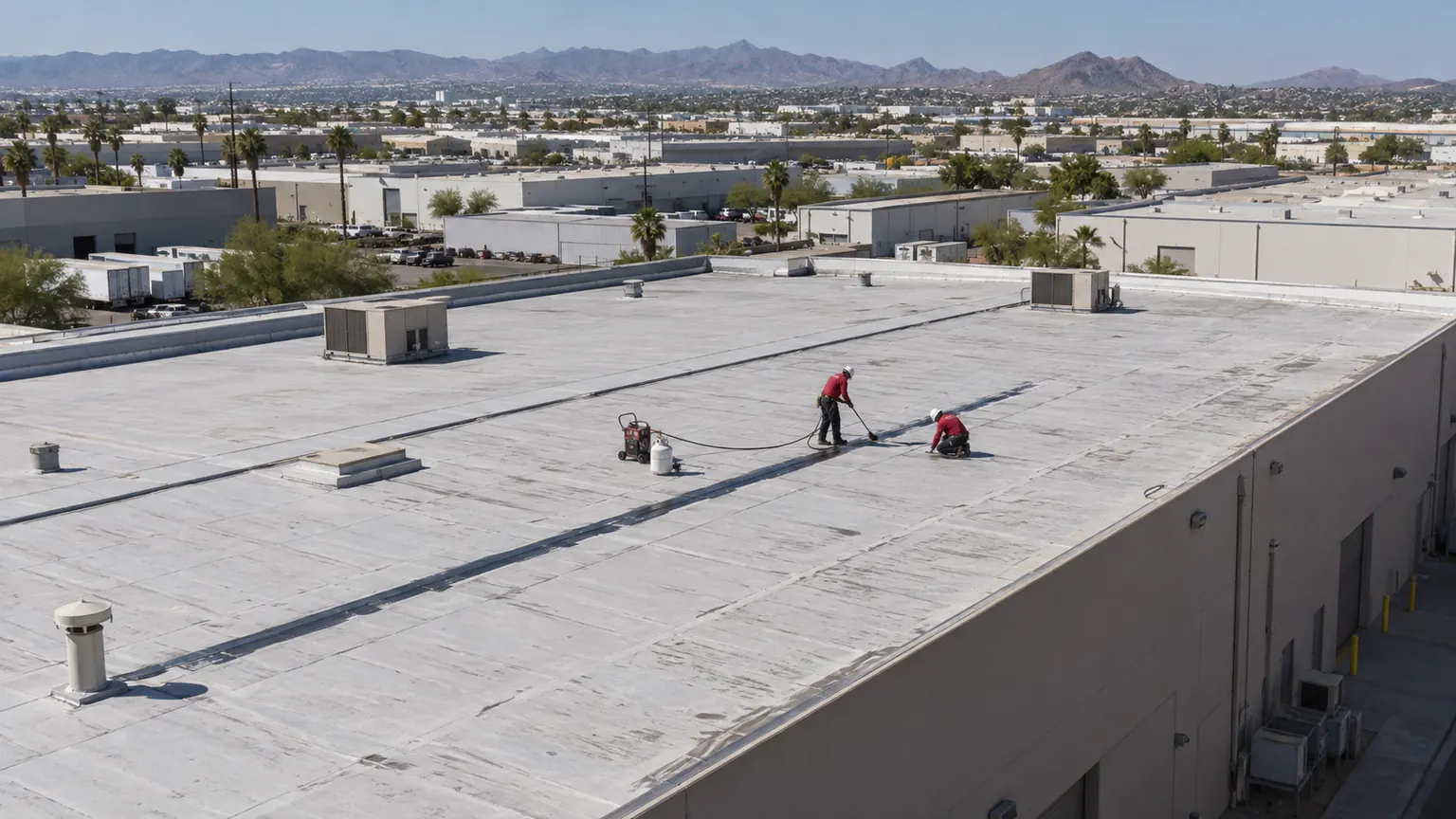
Flat Roof Repair
Most traced leaks end at a flat roof seam, curb, or drain, and the permanent fix follows the flat roof method for that system.
Flat roof repair in Glendale

Commercial roof leak repair in Glendale starts above the stain. We trace the water across the roof to the seam, curb, or flashing letting it in, then fix that spot.
Above the stain, then upslope
Moisture meter and water test
Temporary seal before rain
Recheck after the next storm
Most leaks come from one or two failed details. A few signs point past a single repair.
Water moves before it shows, so tracing checks five zones between the stain and the opening.
The stain marks where water finally dropped. Marking it on a roof plan gives the starting point for the search above.
Seams uphill from the stain come next, since water rides the deck flutes downhill from the opening.
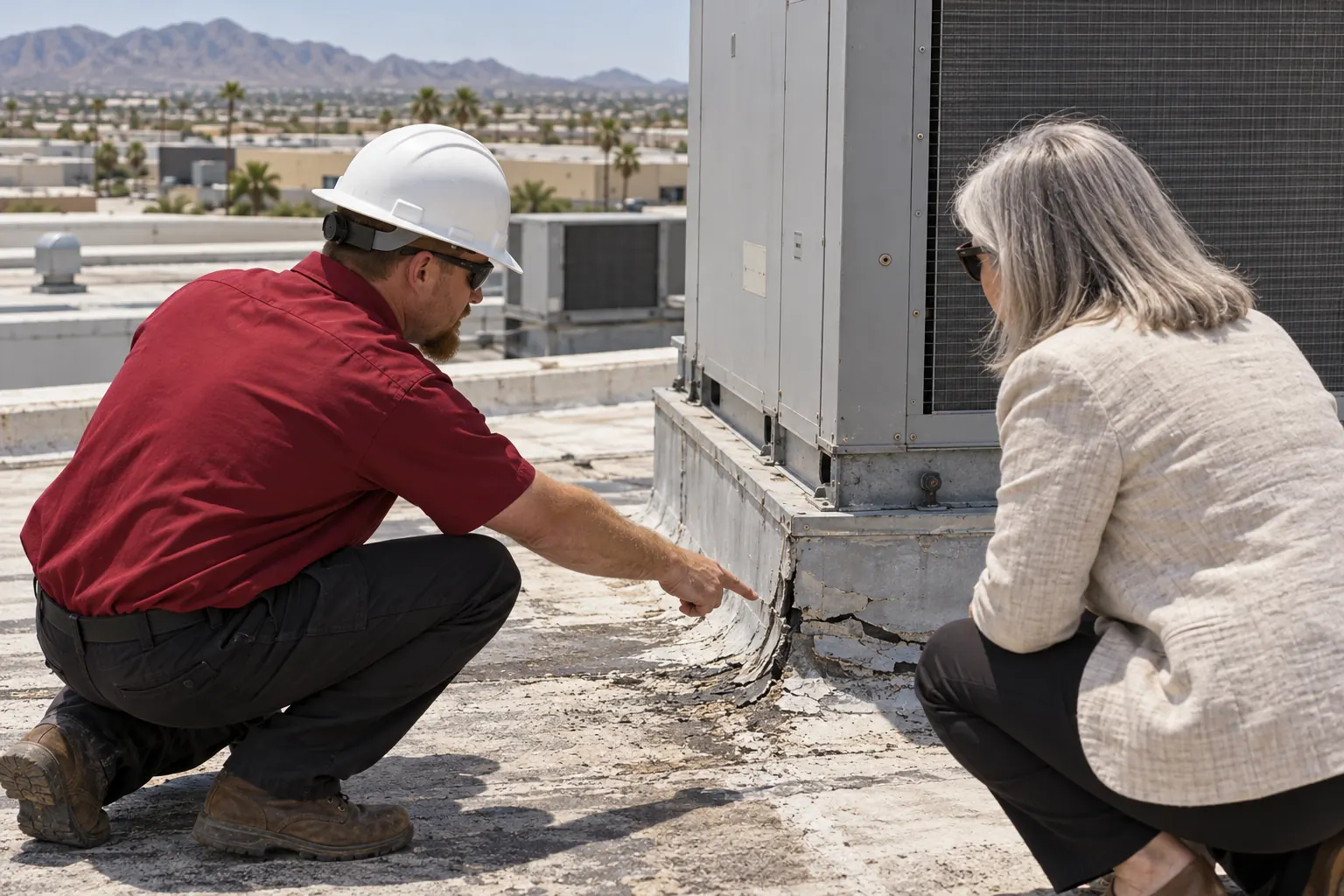
Rooftop units, pipe boots, and pitch pans get checked for split base flashing and shrunken sealant.
Where the roof meets a parapet, loose flashing lets water run inside the wall and surface far from the edge.
Backed-up drains push water against laps that stay dry the rest of the year.
Tracing tools and repairs, matched to how the water behaves.
| Method | What It Finds Or Fixes | When It's Used |
|---|---|---|
| Dry-Weather Roof Walk | Open seams, split curb flashing, loose coping | First, on every leak |
| Moisture Meter Readings | Wet insulation and how far it spread | Around every stain location |
| Controlled Water Test | The exact entry point | One section at a time, when the walk leaves doubt |
| Temporary Seal | Slows water until the permanent fix | When rain is close |
| Permanent Detail Repair | The failed seam, curb, or flashing | Once the roof is dry and the cause is known |
Patching where the water drips leaves the real opening working. Fixing the source ends the cycle of buckets and new stains.
Closing the roof opening protects pallets and equipment under the drip, so the tarps and buckets come down for good.
Found early, wet insulation stays in a small area that comes out during the repair, instead of spreading under the membrane through a whole monsoon season.
One traced opening often explains several stains, since water spreads along the deck before dropping.
Each traced leak gets marked on a roof plan with the seam, curb, or flashing that failed, which speeds up the next repair on the same building.
Call and tell us where it's dripping. A temporary seal can slow the water while the opening is traced.
Tracing comes before patching, so the repair lands on the opening instead of the drip.
Stains inside get mapped first, then the roof above gets walked in dry weather, checking every seam, curb, and penetration along the path. Photos of each stain help match it to the roof above later.

Moisture readings show where water has spread under the sheet, and a controlled water test on one section at a time confirms the real entry point. Seams and curbs on the downhill side of the opening get ruled out too.
A backed-up drain gets cleared, an open seam or split flashing gets compatible patch material, and inside, buckets and plastic sheeting protect stock. Anything stored under the drip gets moved or covered before work starts.
Once the roof is dry and the cause is known, the stopgap comes off and a permanent repair goes on in the roof's own material. Wet insulation found during tracing gets cut out and replaced at the same time.
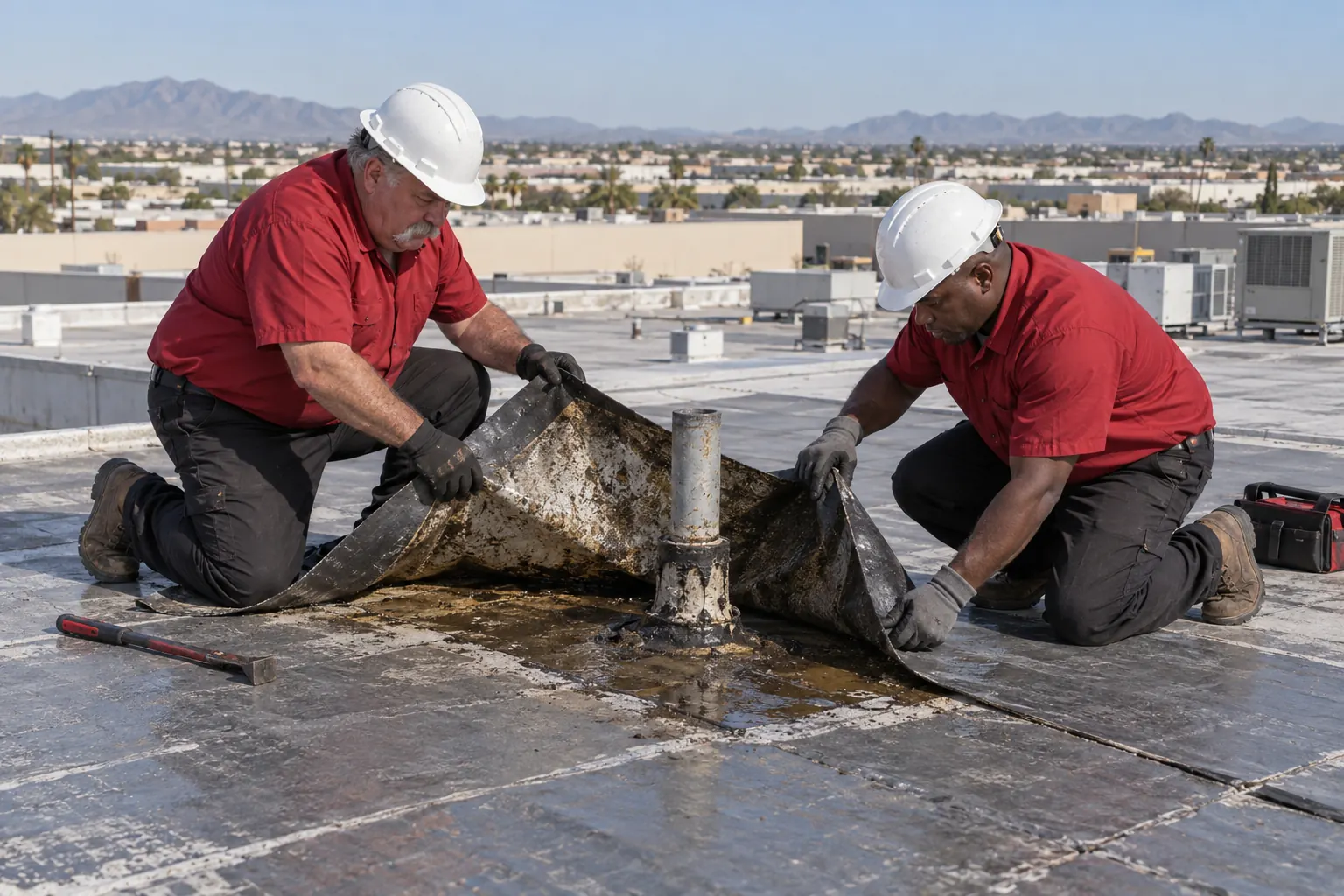
After the next rain, the stain area inside and the repair above both get checked, and any new drip gets traced the same way. A stain that keeps growing points to a second opening, which gets traced next.
Once the opening is found, the fix follows one of these methods.
Most traced leaks end at a flat roof seam, curb, or drain, and the permanent fix follows the flat roof method for that system.
Flat roof repair in Glendale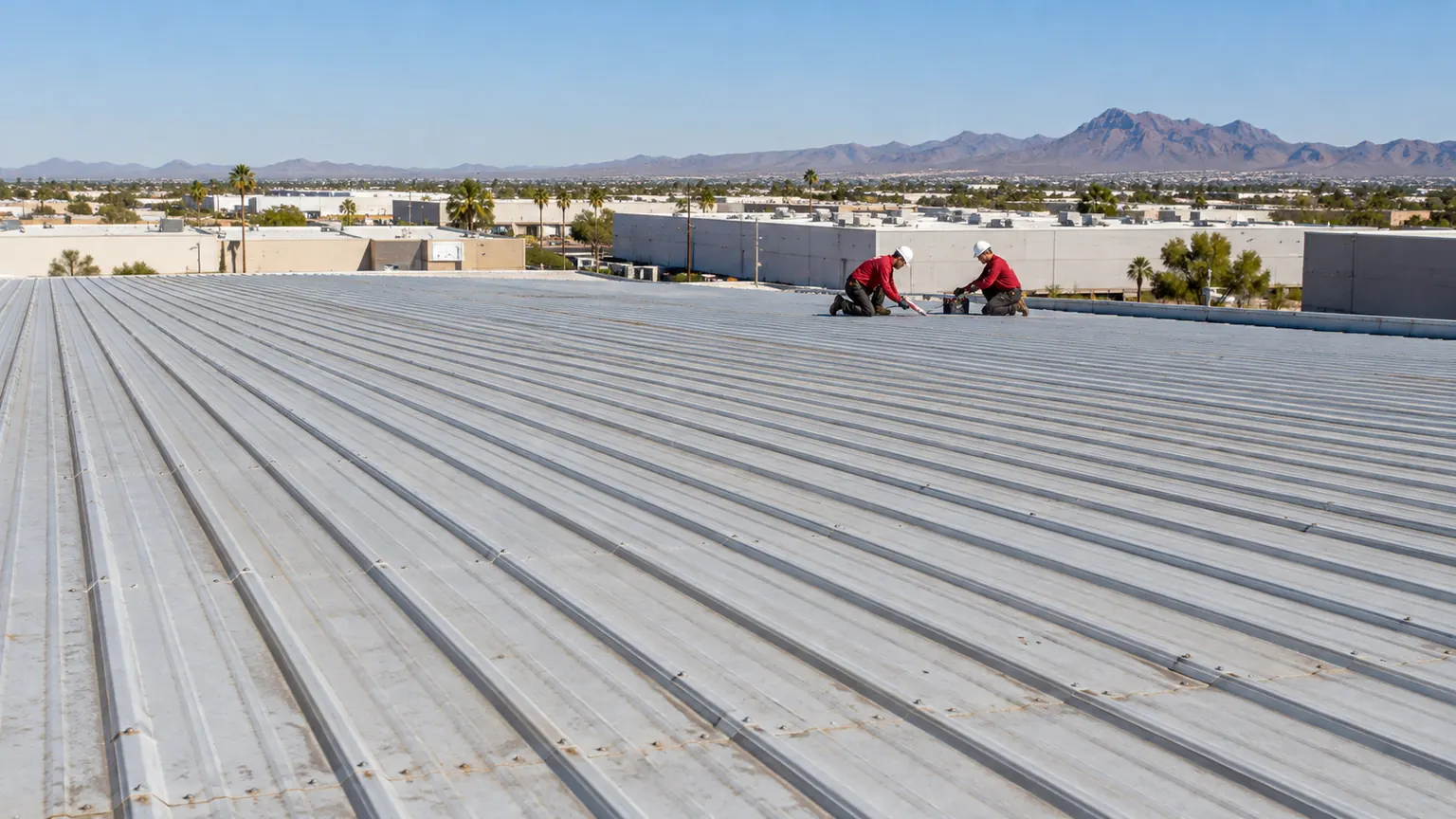
Leaks under metal roofs trace to fasteners, laps, and skylights, which get metal-specific repairs.
Commercial metal roof repair in GlendaleWhat Glendale owners ask when the ceiling starts dripping.
Water travels before it shows. It rides deck flutes, insulation joints, and tapered boards until it finds a gap, then drips onto the ceiling tile, so tracing starts above the stain and works upslope.
Moisture meters and controlled water tests are the main tools. A water test runs on one section at a time, which confirms the entry point before any patching starts.
That points to a detail that floods only when water rises, such as a packed drain, a low scupper, or flashing near the base of a wall. Those spots get checked after clearing debris.
Yes. Stains, wet ceiling tiles, and drip points inside get matched to spots on the roof, so the interior visit is part of tracing the leak.
Often. Water spreading along the deck can drop in more than one place, so a single split curb flashing can explain two or three stains in neighboring rooms.
They show up more, because storms drop heavy rain on weak spots that formed during the dry months. A seam that only seeped in winter can pour during a July storm, so known leaks are worth tracing before June 15.
Move what you can and cover the rest with plastic sheeting. Photos of the wet area help the insurer if the leak came from storm damage.
Call or request a free estimate. We'll start above the stain and find the opening on your Glendale roof.
Leave a name and number and we'll call you back about the leak or damage.
Or call now: (623) 310-0166