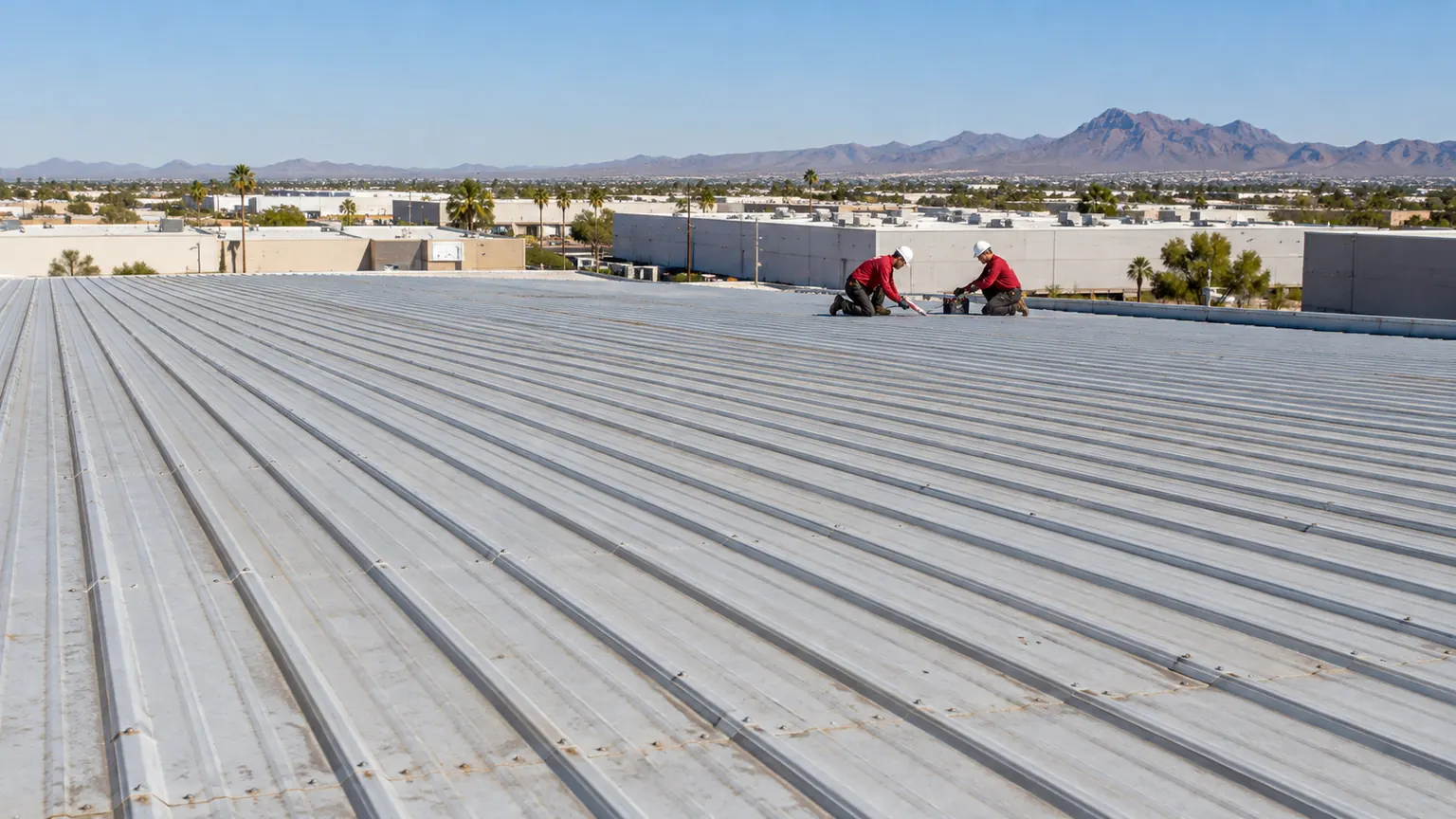
Commercial Metal Roof Repair
Plants with ribbed metal roofs need fastener, lap, and rust repairs alongside the equipment work.
Commercial metal roof repair in Glendale
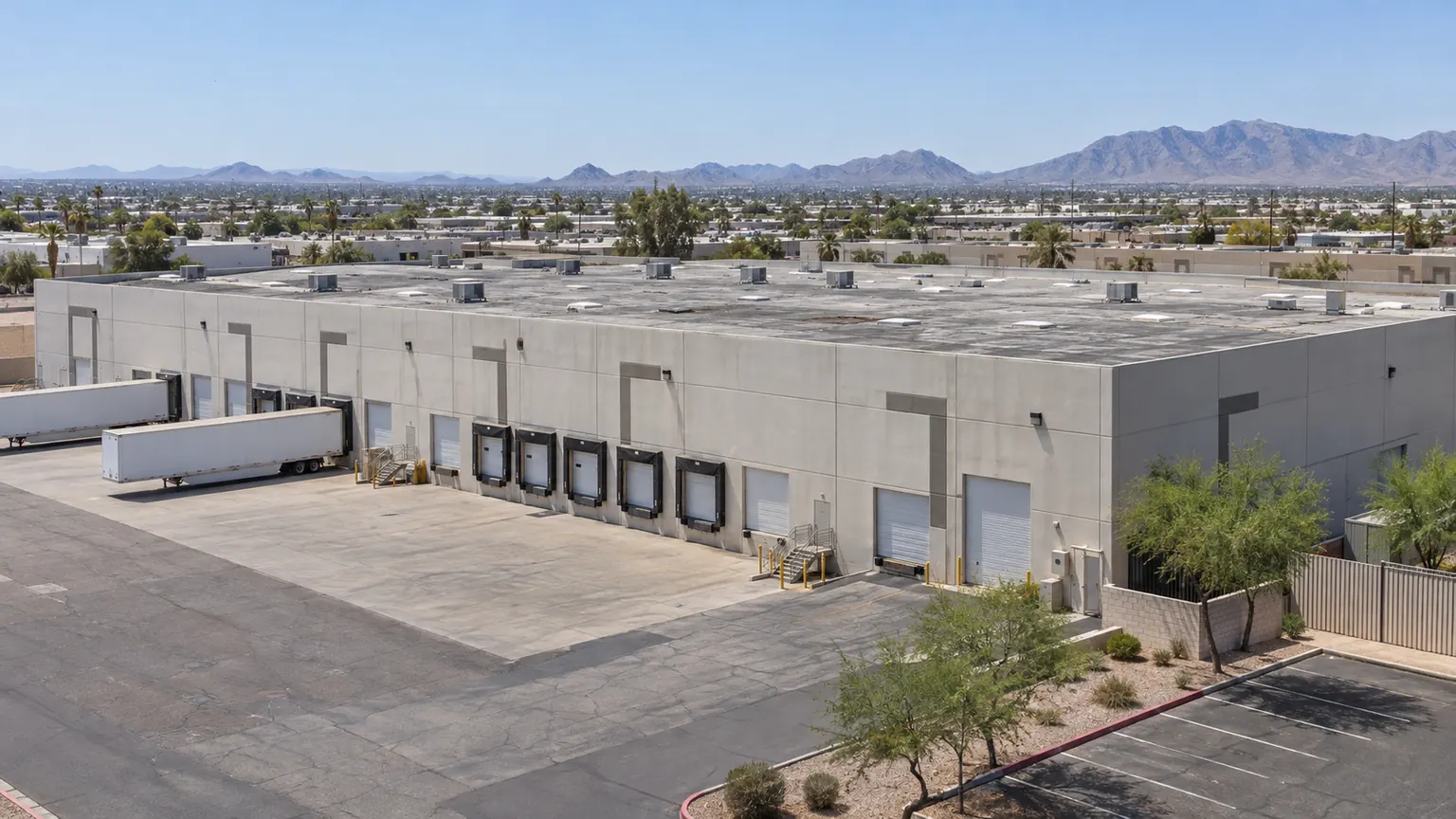
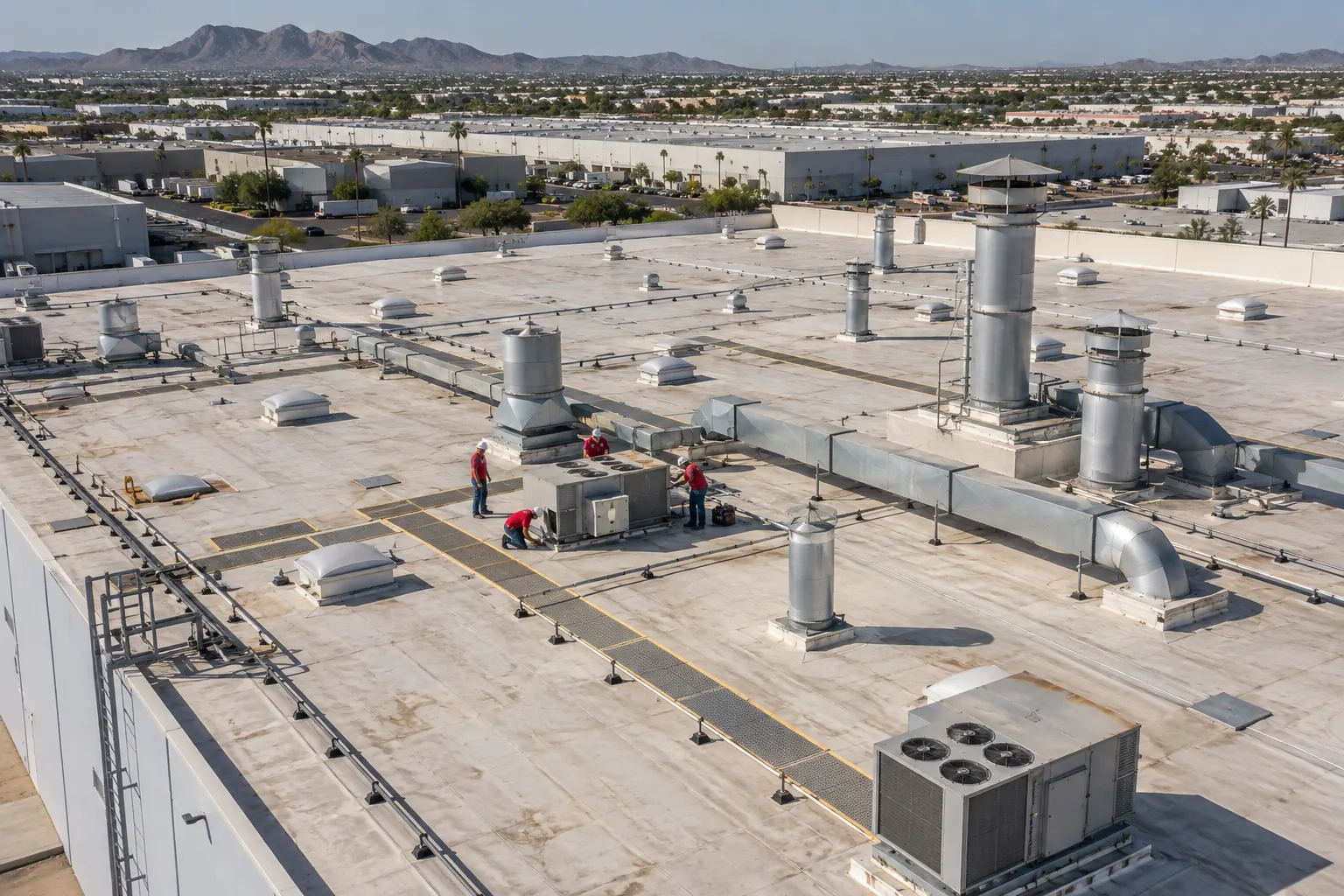
Industrial roof repair in Glendale, planned around running equipment: fan shutdowns, residue cleanup, and work zones set with your facility manager before anyone goes up.
Set with your plant manager
Shut down or shielded
Scheduled around shifts
Pads on maintenance routes
Most industrial roof repairs happen while production runs. A few conditions call for a bigger plan.
Equipment on the roof changes how it wears. These five zones take the most damage on industrial buildings.
Heat and vibration crack the base flashing, and residue from the exhaust softens the membrane around the curb until it tears under foot traffic.
Oils and residue build up near outlets, so patches there need cleaning first and often a more resistant material.
Maintenance traffic wears the sheet along the paths to rooftop units, and walkway pads go down where staff walk.
Big curbs and duct supports pull flashing loose as units cycle on and off, leaving gaps at the corners where water runs straight into the curb.
Long runs between drains let ponding sit on seams, and the deck under wide spans shows leaks far from their source.
Each repair is paired with the step that keeps the plant running.
| Repair | What It Fixes | How Production Keeps Running |
|---|---|---|
| Fan Curb Re-Flash | Split base flashing at exhaust fans | Fan locked out or shielded during work |
| Residue Cleanup And Patch | Membrane softened by oils | Vents shut down for the short patch window |
| Resistant Membrane Section | Grease damage near outlets | Section scheduled during a planned stop |
| Walkway Pad Install | Wear along maintenance routes | Pads go down between shift changes |
| Seam Repair Across Spans | Open laps on wide roofs | Zones worked away from active intakes |
Leaks over production cost more than the roof work itself. Repairs planned early happen on your schedule.
A planned repair zone around a fan curb takes a short shutdown instead of a stop caused by water on the floor. The fan goes back on the same shift.
Scheduling repair zones around shift changes keeps roofers off the roof during the busiest hours and away from intakes while they run. Intakes stay clear of adhesive fumes too.
Walkway pads along maintenance paths protect the sheet from boots and tool carts and give staff a clear route to equipment. Fewer boots on bare membrane means fewer punctures.
Cleaning residue early stops grease from spreading the soft area that later needs a full section replaced. That keeps the repair a patch.
Tell us which line or bay is affected and what equipment sits on the roof above it.
The plan comes first on a plant roof, then the same tracing and repair order as any other job.
The walk maps every exhaust fan, process vent, and rooftop unit, with moisture readings near leak areas and notes on which equipment can be shut down. Lockout points and intake locations get marked on the roof plan before work starts.
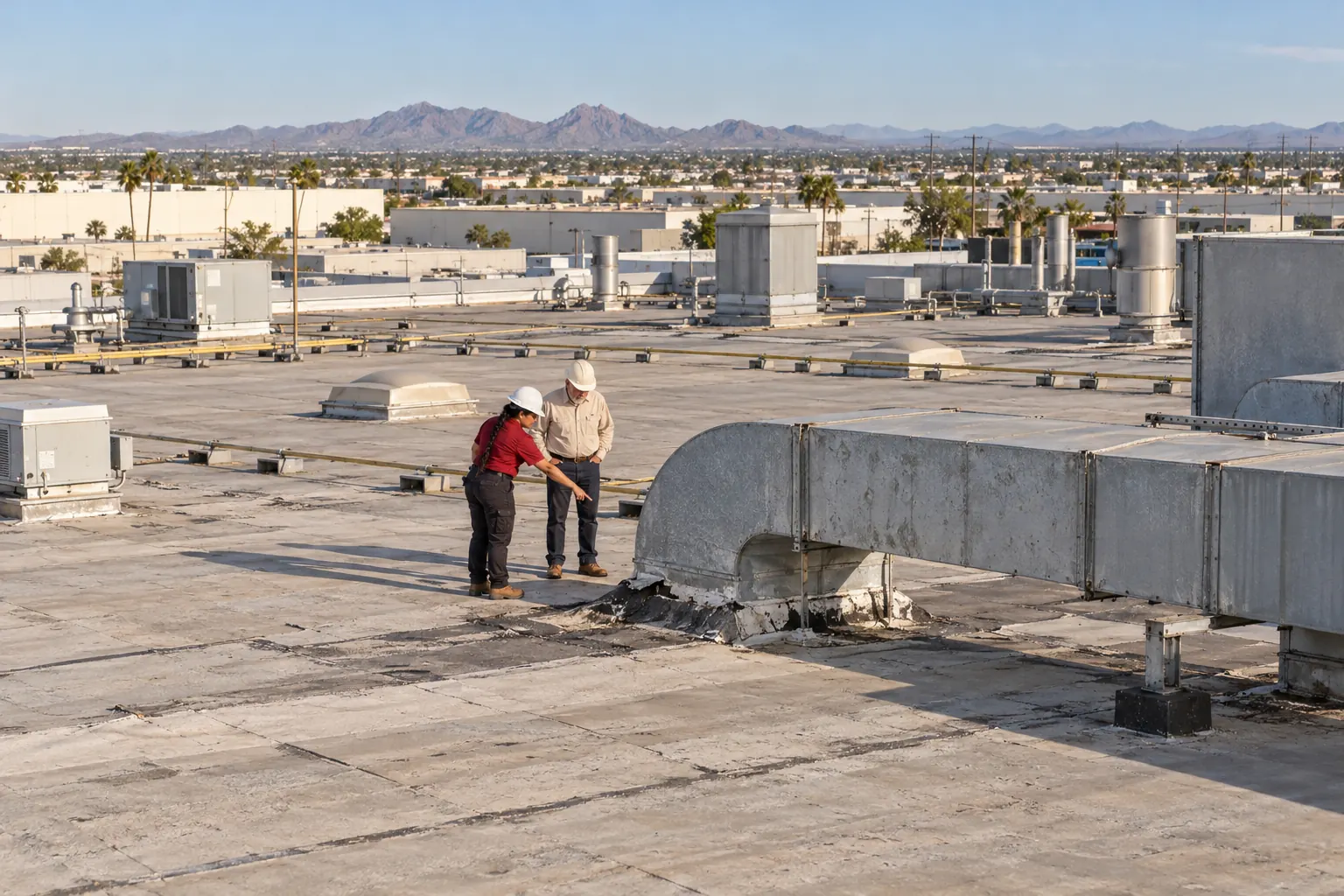
Leaks over production get traced from the stain to the opening, with water tests run away from active intakes. Stains over a production line get priority so the floor below stays dry.
Fans near the work get locked out or shielded, residue gets cleaned off, and any active leak gets a temporary seal. Walkway routes get flagged so plant staff and roofers keep clear of each other.
Failed curb flashing and seams get permanent repairs, and grease-damaged membrane near outlets gets a more resistant material. Walkway pads go down on worn routes at the same visit.
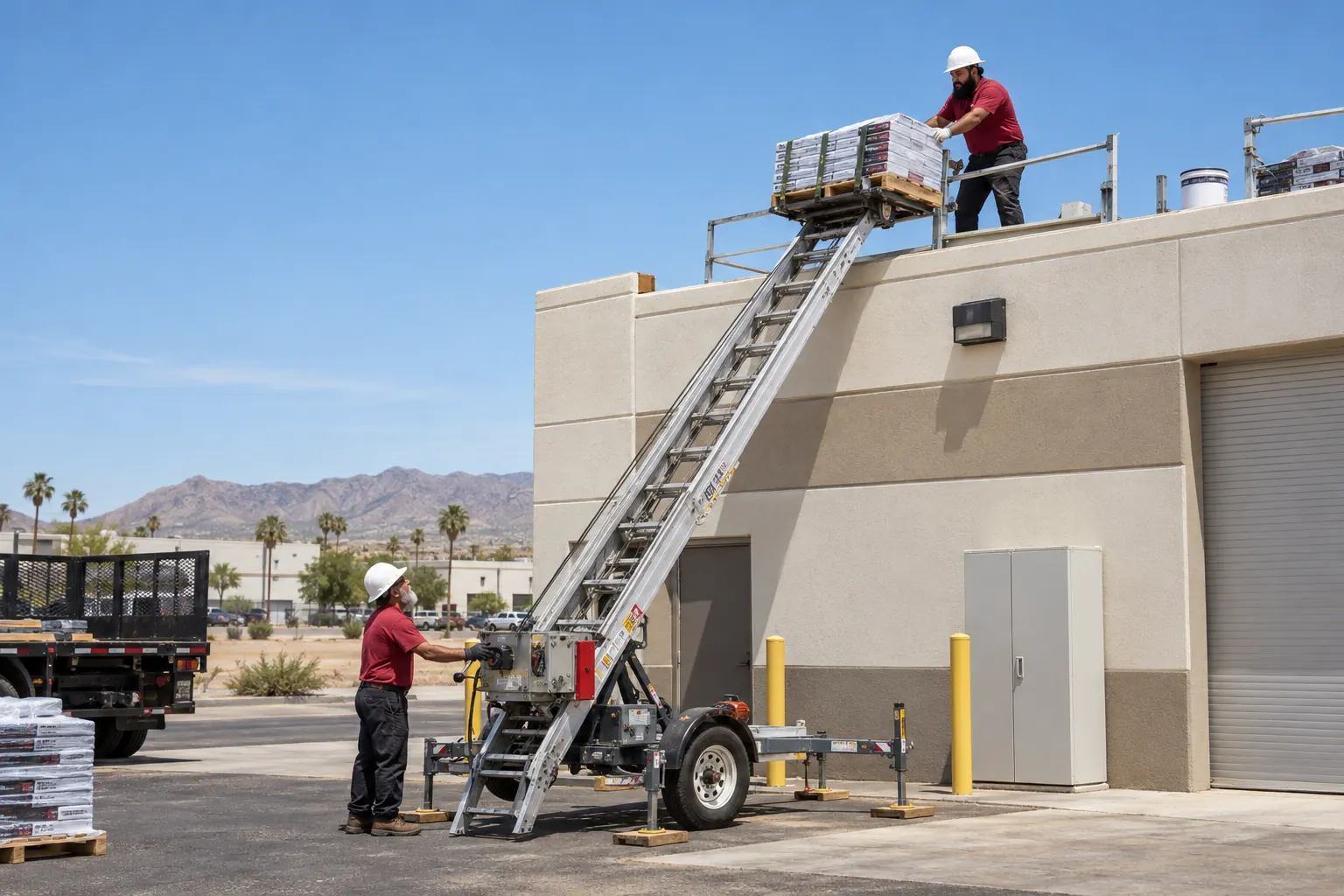
After the next storm the repaired zones get checked from the walkway routes, with any new drip inside reported to the facility manager. Fans locked out for the work get released once the facility manager signs off.
Industrial roofs often combine these two services.
Plants with ribbed metal roofs need fastener, lap, and rust repairs alongside the equipment work.
Commercial metal roof repair in Glendale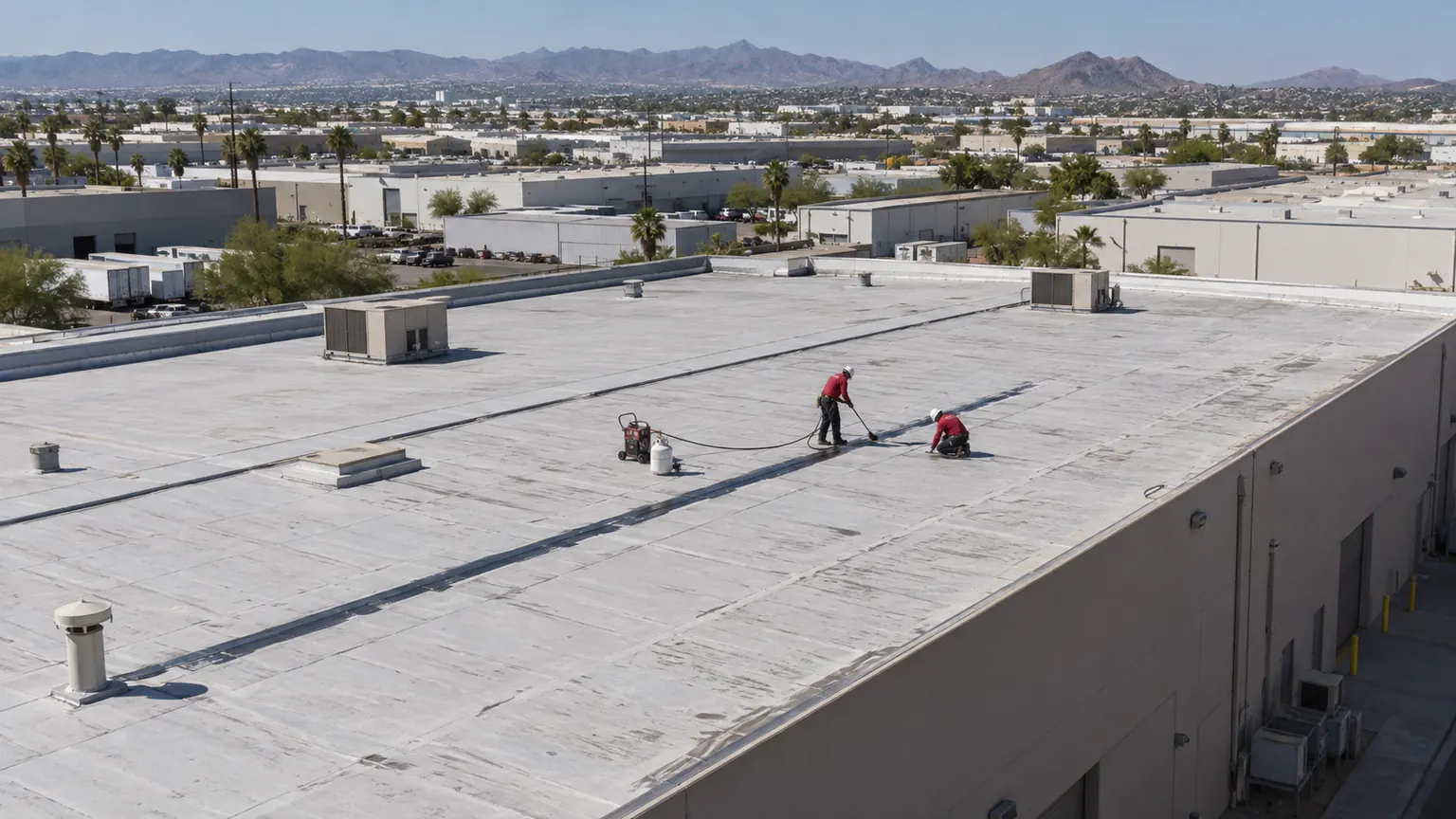
Membrane sections between the equipment follow the flat roof method for their system.
Flat roof repair in GlendaleWhat facility managers ask before work starts.
Usually. The work gets planned with your plant or facility manager first: exhaust fans and process vents shut down or shielded, oils cleaned off so patches stick, repair zones scheduled around shift changes, and walkway pads along maintenance routes.
Grease and process residue land on the sheet around the outlet and break it down over time. Patches there need the residue cleaned off first, and heavy damage calls for a more resistant membrane.
Night or off-shift work is possible when the plant needs it, and timing is one of the things that affects the cost.
Fan lockout, covered intakes, and an agreed route across the roof. The facility manager confirms which equipment stays running and where staff will be during the repair.
Yes. Pads go down along the routes maintenance staff use most, which protects the membrane where foot traffic was wearing it thin.
It stays in place. Flashing gets redone around curbs and supports with the units set where they are, and units only come up when a curb is rotted or too low to flash.
They can. Racking feet, conduit, and antenna mounts get flashed like any other penetration, and the panels or mounts stay in place unless the curb under them has failed.
In zones. Wide roofs get mapped into sections, each repaired and rechecked before moving on, so equipment areas can be scheduled one at a time.
Call or request a free estimate, and we'll walk the roof with your facility manager first.
Leave a name and number and we'll call you back about the leak or damage.
Or call now: (623) 310-0166